
Topics in this issue of Blues Update:
- From the Chair: Celebrating the Industry’s Many Successes
- 2025 Blueberry Convention Sets Attendance Records
- NABC Advocating for Economic Aid to Support Blueberry Growers
- DOL Announces New AEWR Methodology
- New Webinar Series Provides Practical Insights into Ag Trade
- NABC Leads Letter to USDA to Save the Beltsville Agriculture Research Center
- Save the Date for The Blueberry Hill Climb & Industry Meetings
- NABC Membership Keeps Growing!
From the Chair: Celebrating the Industry’s Many Successes
By Teddy Koukoulis
NABC Chair
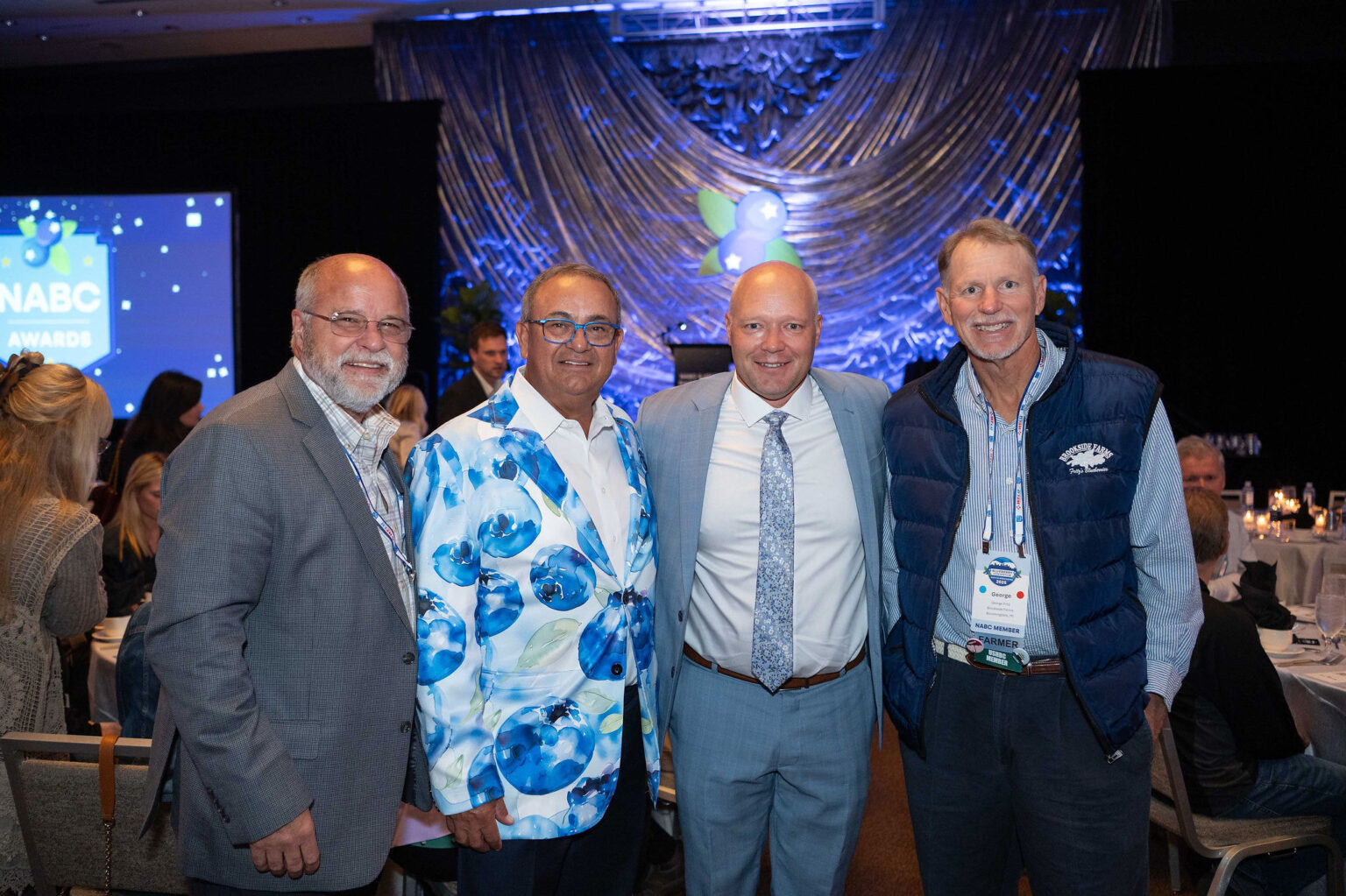
Nearly 500 blueberry industry stakeholders gathered earlier this month at The 2025 Blueberry Convention in Seattle – our largest event ever!
From tech-focused education sessions to inspiring keynotes to honoring blueberry industry thought leaders, the convention brought together growers and industry partners to acknowledge how far we’ve come and how blueberries continue to strengthen our communities and our economy.
All in all, The Blueberry Convention was an amazing celebration of the industry and a wonderful opportunity for knowledge sharing.
You can read more about the event’s many successes below!
2025 Blueberry Convention Sets Attendance Records
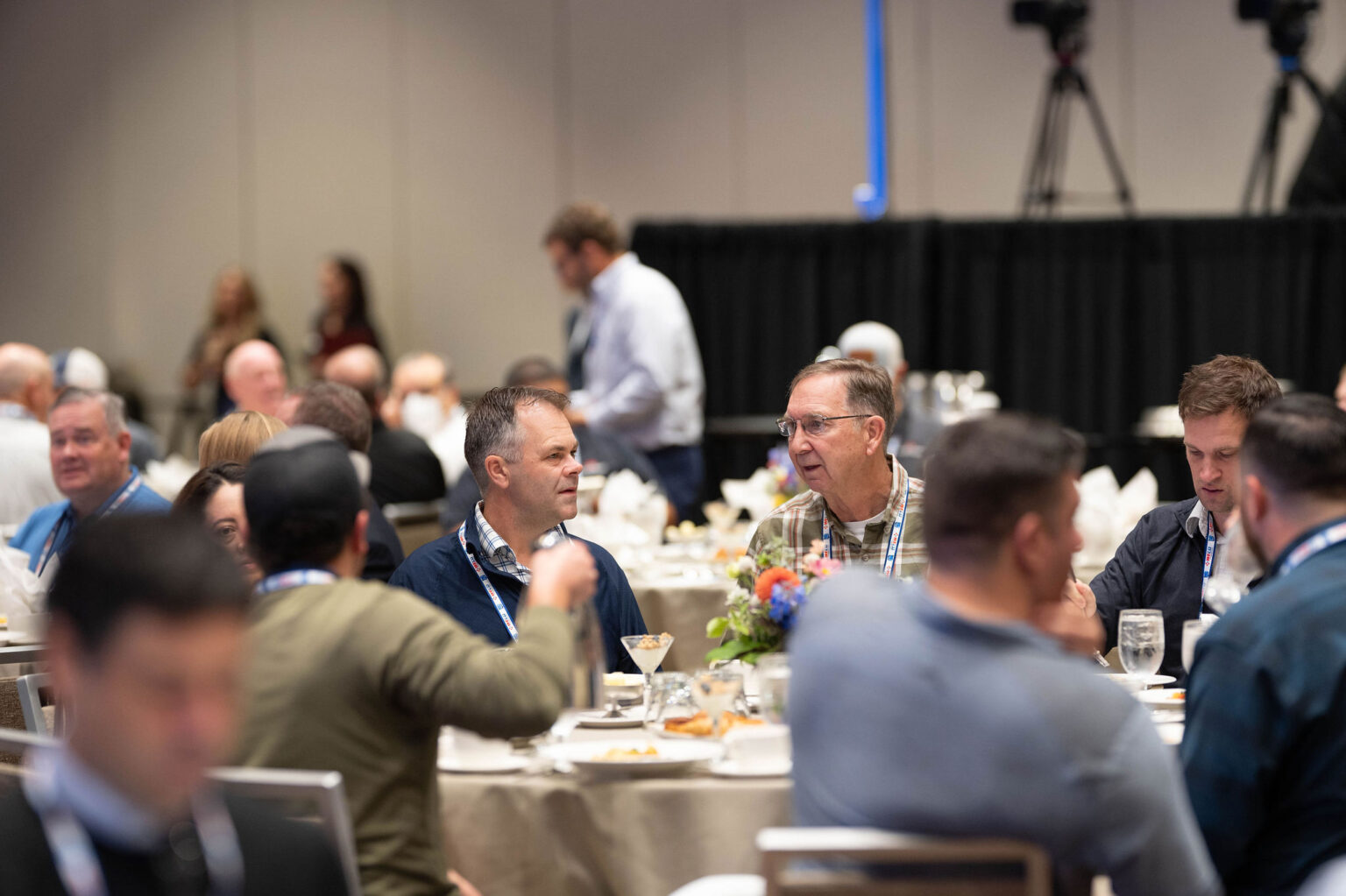
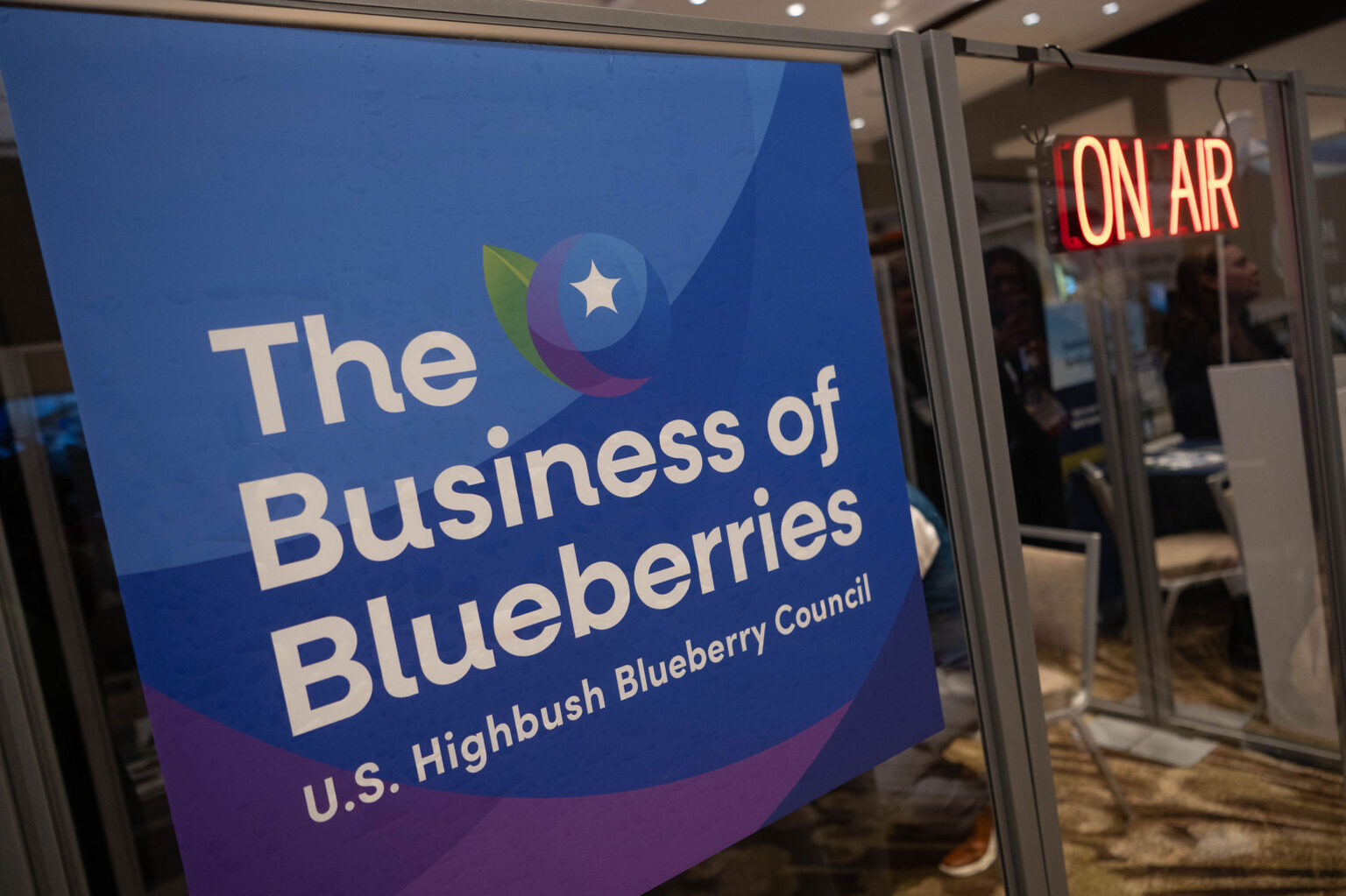
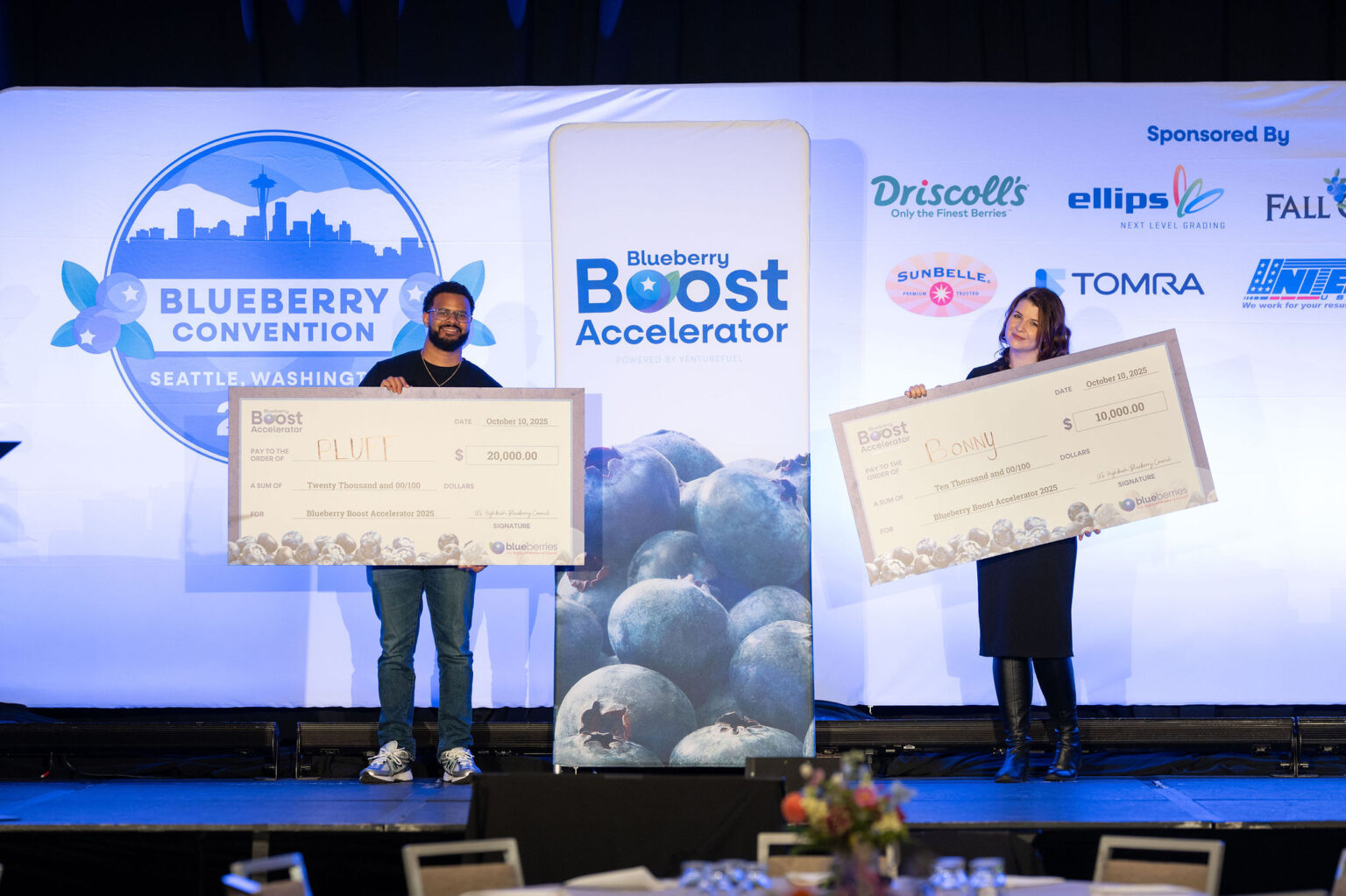
A record-setting 484 people attended The 2025 Blueberry Convention earlier this month in Seattle! In addition to tech-related education sessions, networking opportunities and our annual awards, this year’s convention featured the Blueberry Boost Accelerator Live Pitch Competition; a sold out Blueberry Lane expo space; “Business of Blueberries” podcast recordings on Blueberry Lane; and a critical economic outlook report by David Magaña, senior vice president and senior analyst, RaboResearch Food & Agribusiness.
Here’s a day-by-day recap:
Day 1: Kicking Off the Festivities
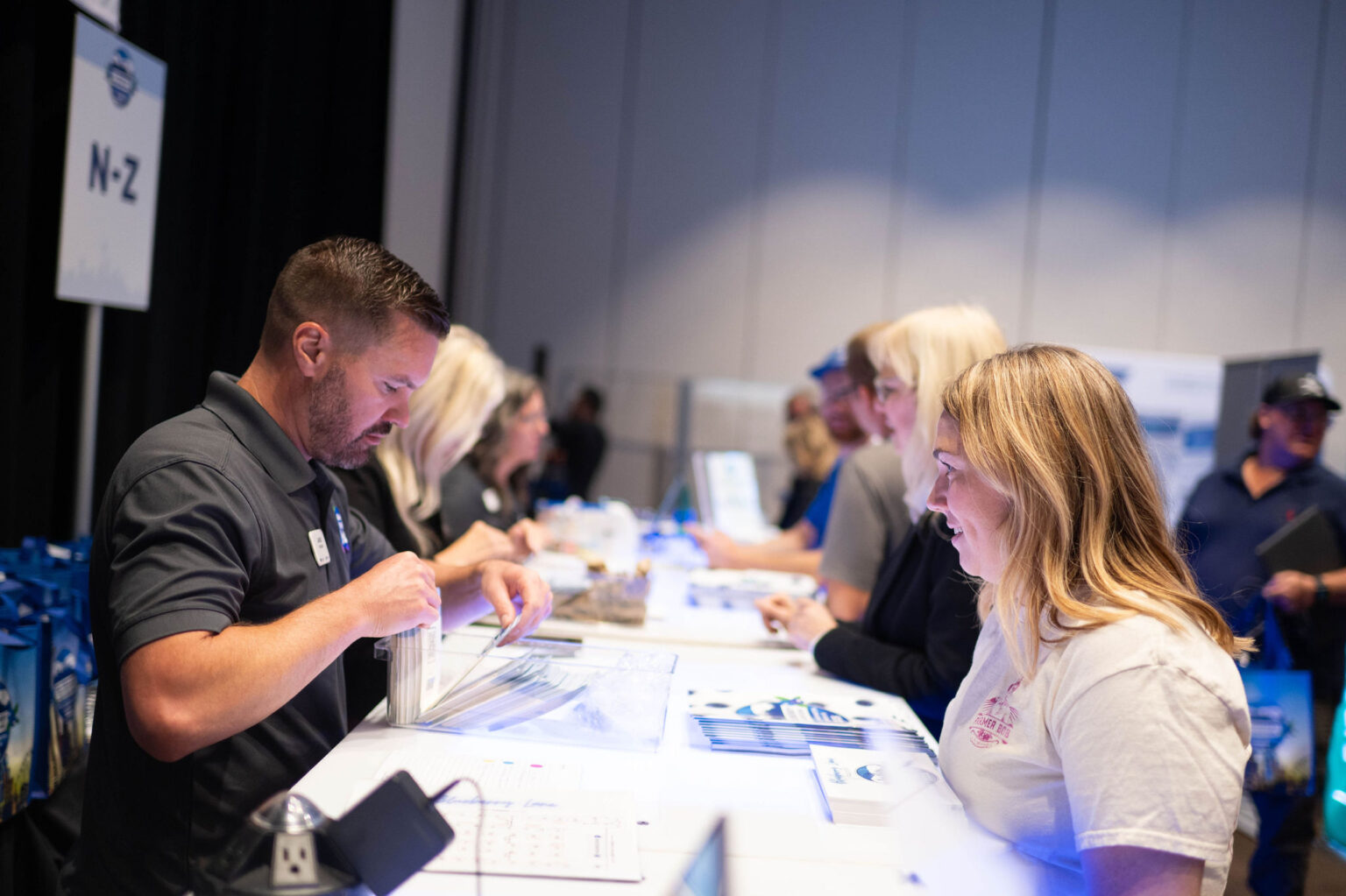
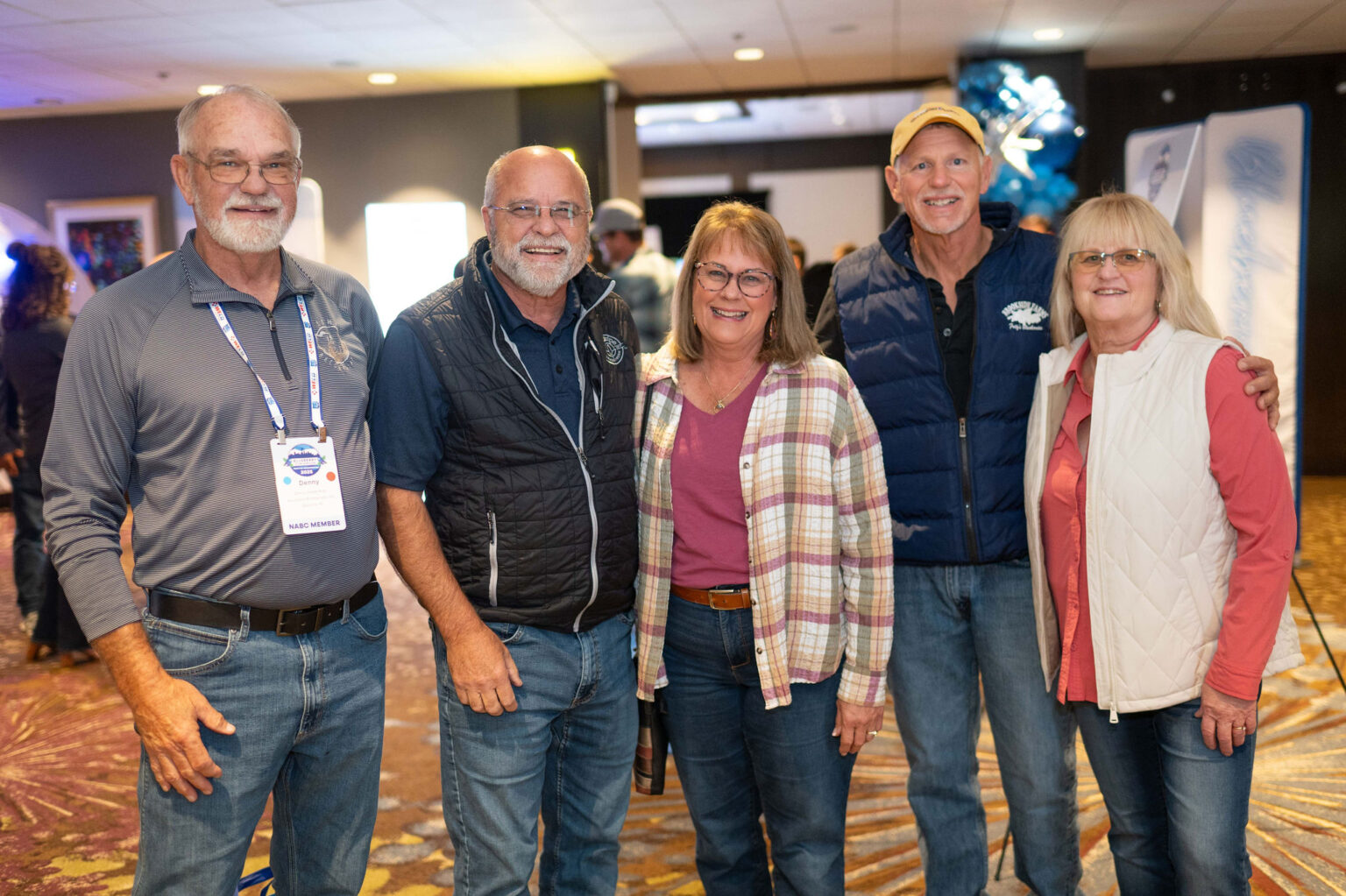
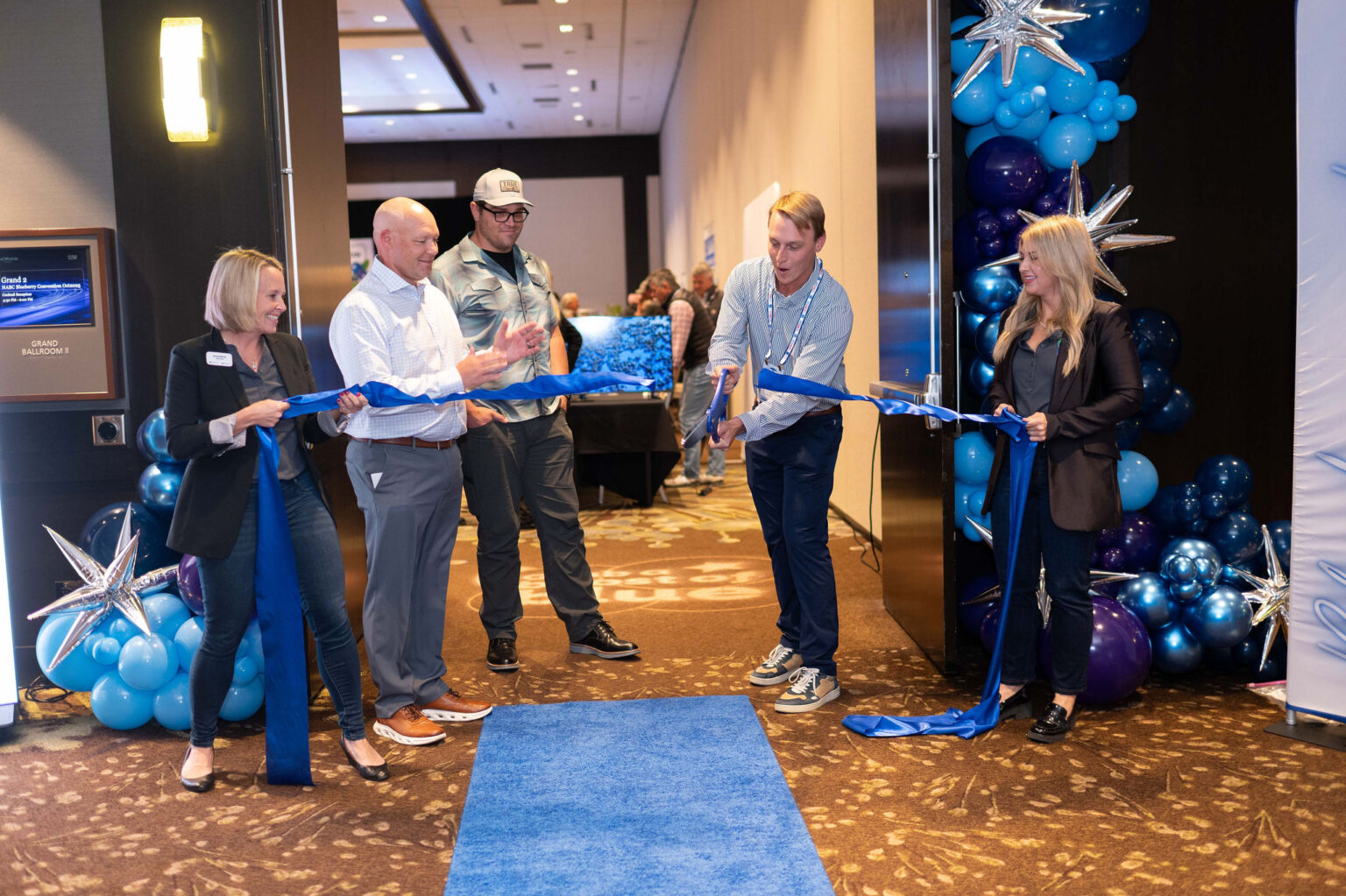
The 2025 Blueberry Convention kicked off with a welcome reception for exhibitors, the President’s Welcome Reception and a ribbon-cutting ceremony to mark the official opening of the trade show floor.
Day 2: Full Speed Ahead
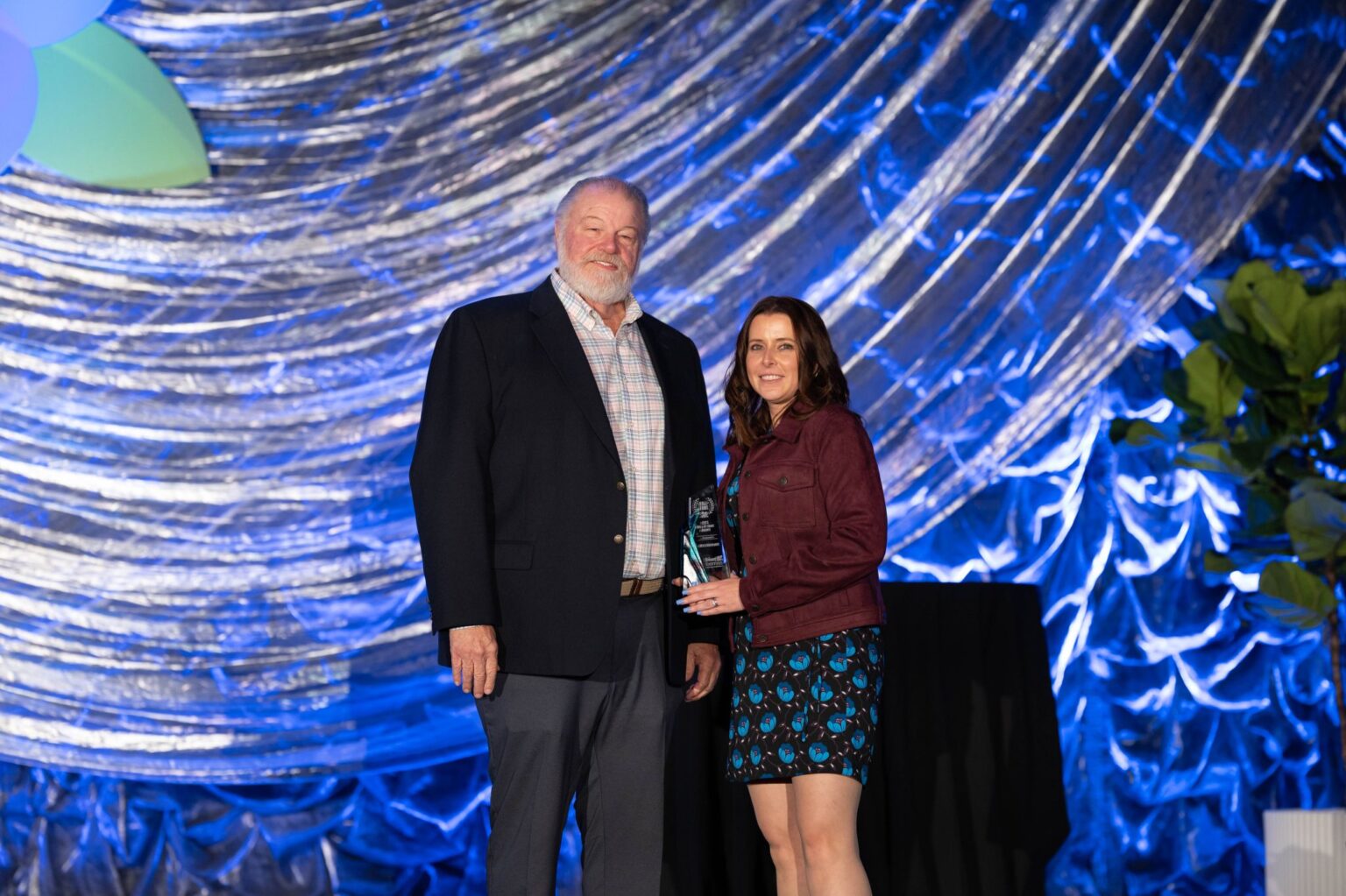
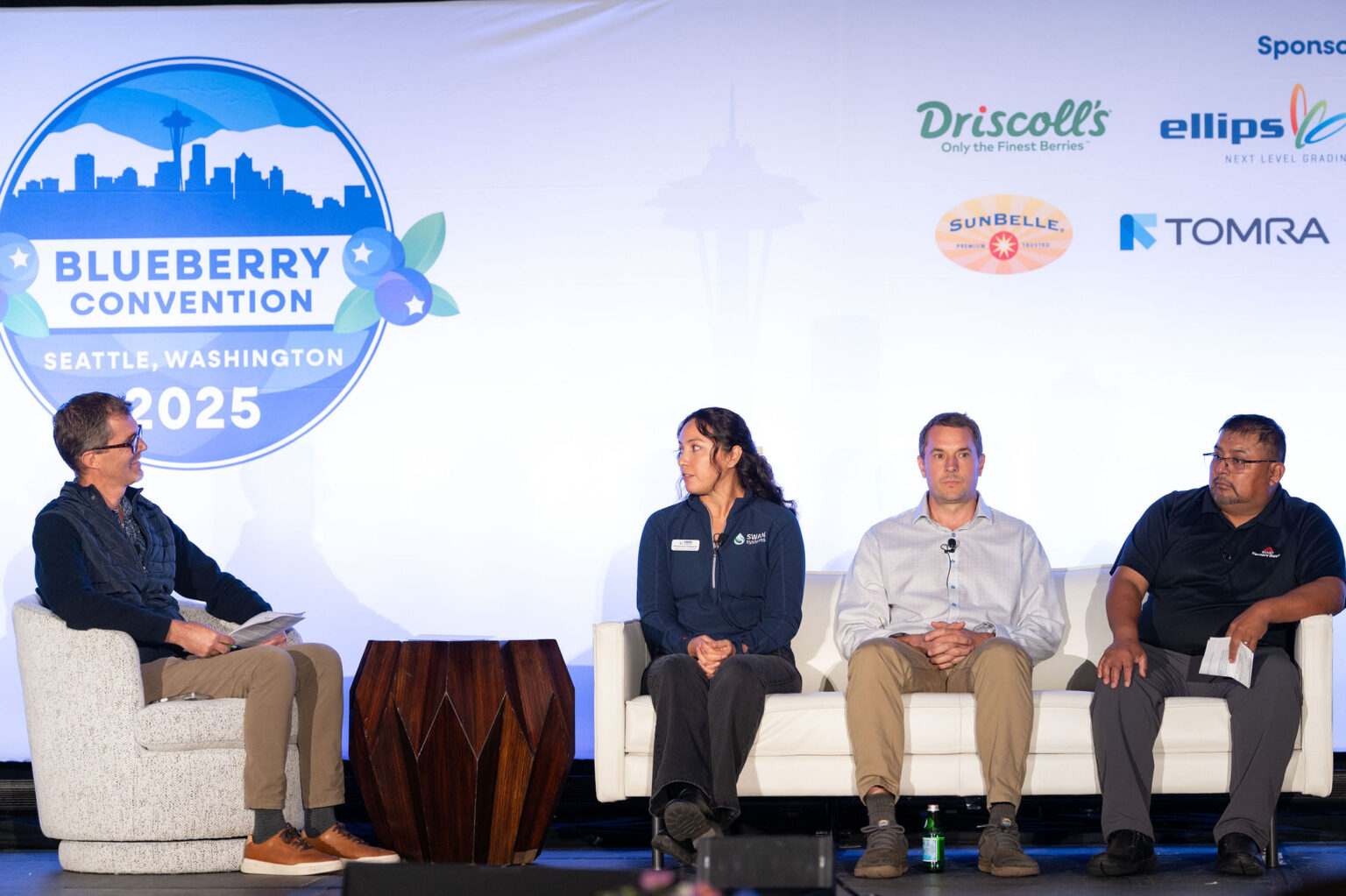
Day 2 of The Blueberry Convention was chock-full of opportunities to learn, connect and honor blueberry industry luminaries. The day kicked off with the BerryFit Club 5K where participants took in the sights of Seattle. The momentum carried into the morning’s keynote session that brought together a panel of leaders to discuss how the industry can unite to influence a successful future.
The afternoon delivered two impactful education sessions: Rooted in Results – Advancing Soil Health and Irrigation Efficiency and Data Collection, and Data Collection and Application – From the Sky to the Ground.
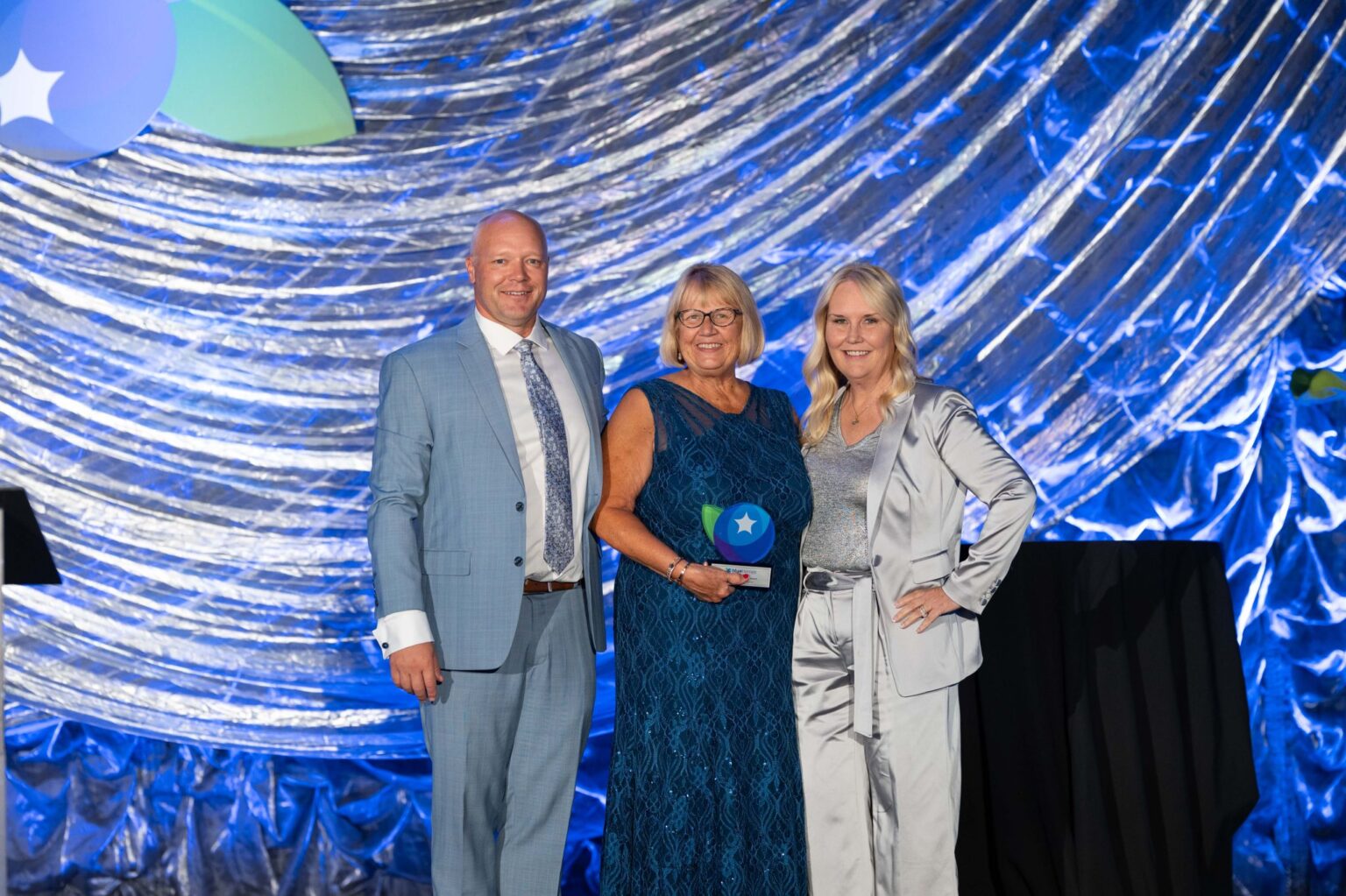
We wrapped up the day with a memorable NABC & USHBC Anniversary and Awards Dinner where we honored industry luminaries and presented the first ever Women in Blueberries Elizabeth White Award.
The Blueberry Hall of Fame Award, the council’s highest honor, went to Victor Moller, owner of Hortifrut (posthumously); and Mike Mainland, retired extension specialist, North Carolina State University. Bill Cline, research and extension specialist in the Department of Entomology and Plant Pathology at North Carolina State University was recognized with the Duke Galletta Award. And Pat Goin, immediate past chair of the NABC Board of Directors and owner of Goin’s Blueberry Lane; and Janice Honigberg, retired founder and President of Sun Belle, were celebrated with the Alex Wetherbee Award. The first-ever Women in Blueberries Elizabeth White Award went to Lorrie Merker, former vice president for MBG Marketing.
Day 3: The Learning Keeps Going
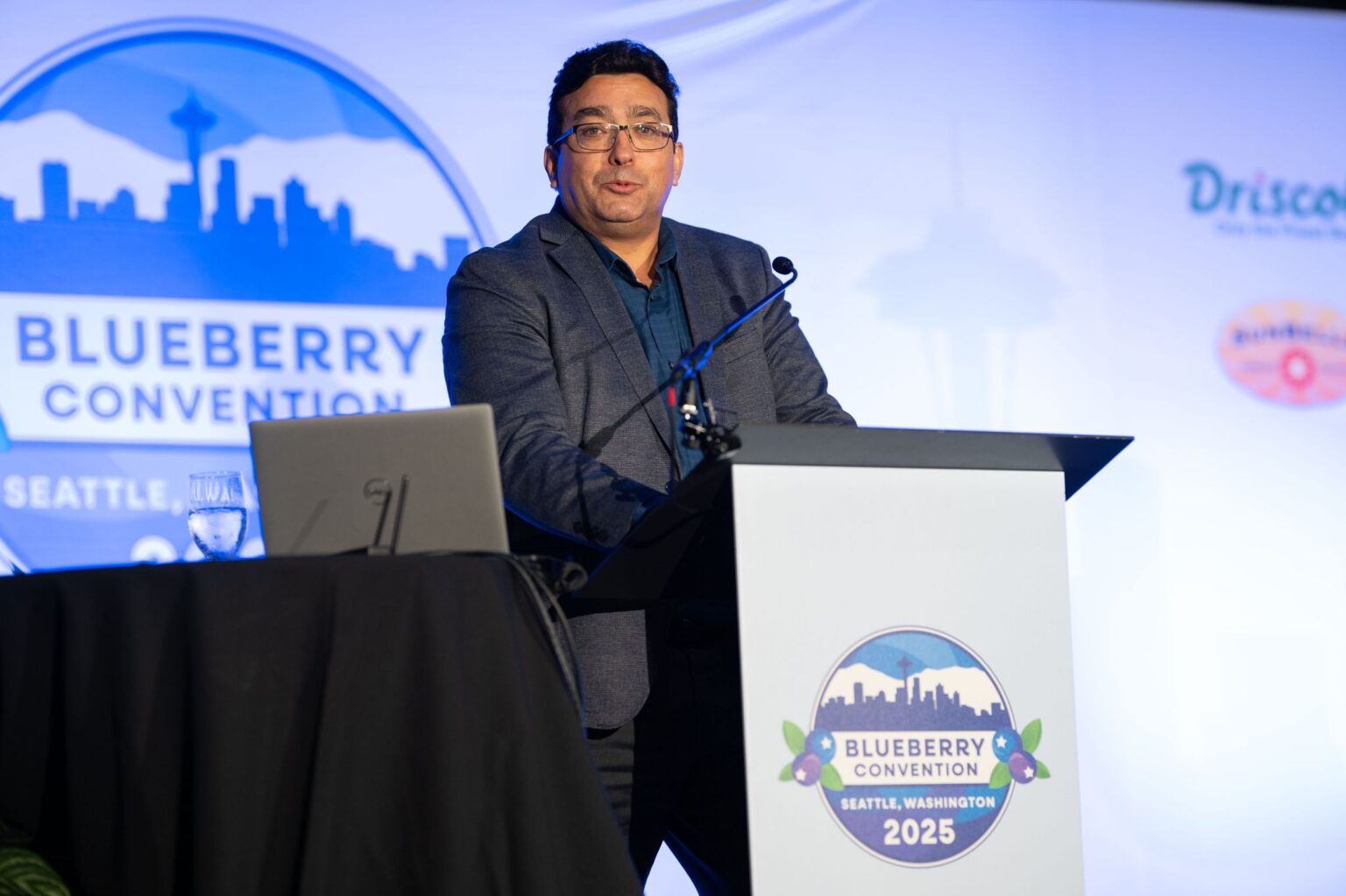
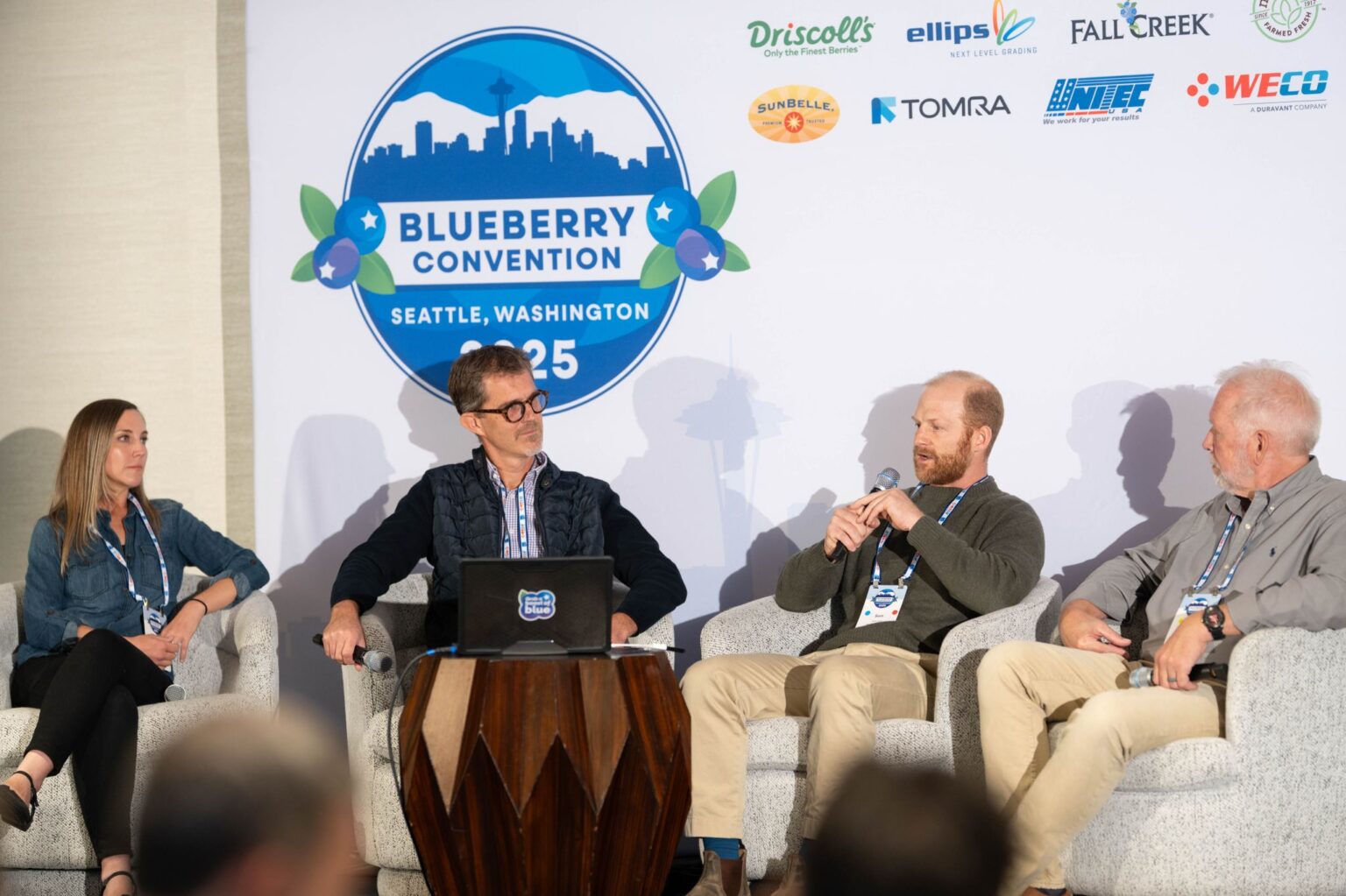
Day 3 of The Blueberry Convention began with BerryFit Club Yoga and time to stroll down Blueberry Lane and Blueberry Row. The morning’s general session breakfast, From Farm to Future – Economic Forces Reshaping the Blueberry Market, was presented by Rabobank’s David Magaña. During this session, we also hosted a graduation for Class 3 of the Blueberry Industry Leadership Program. The morning continued with the session Insights to Action – Shaping USHBC’s Strategy.
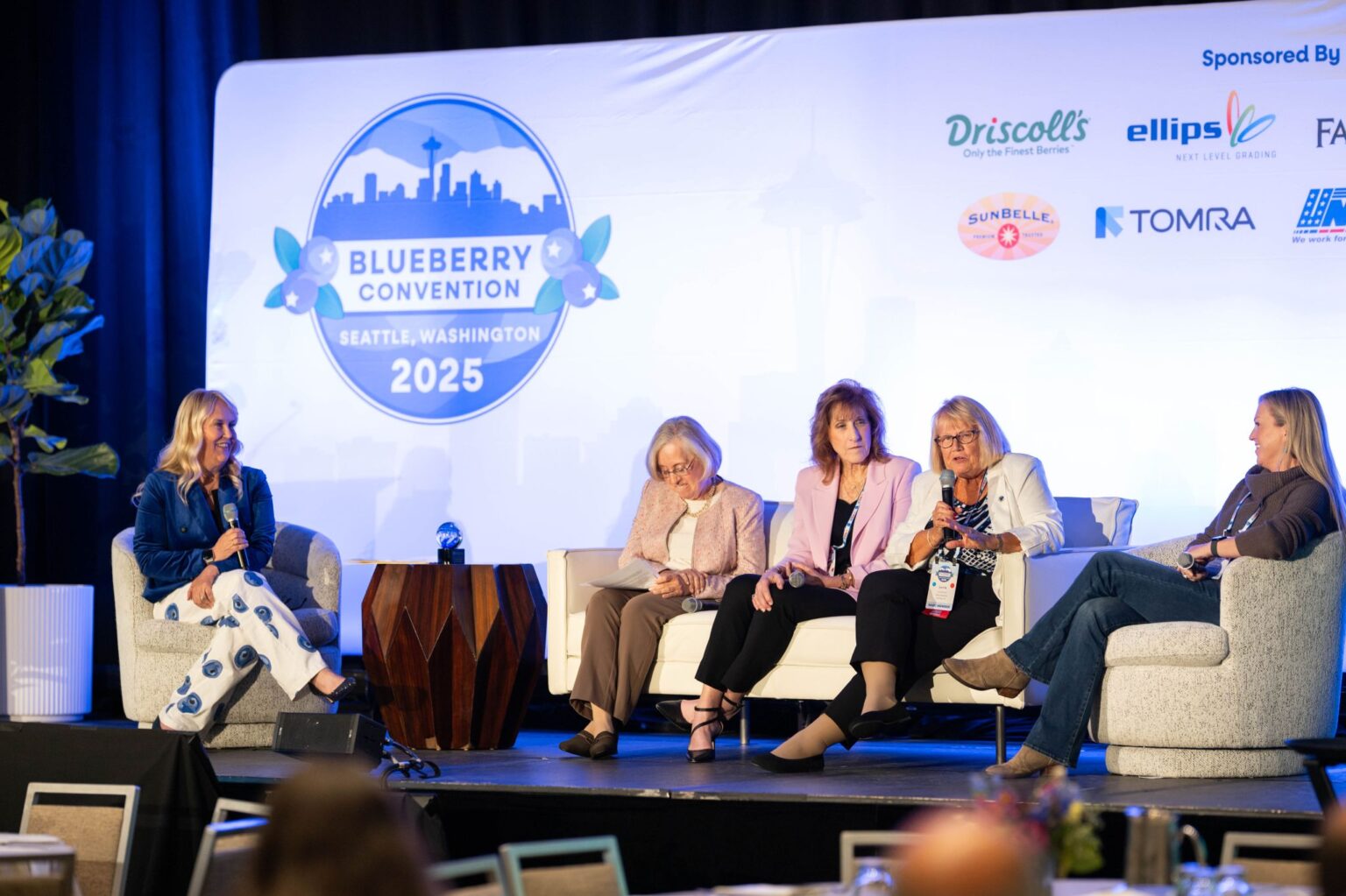
In the afternoon, women in the blueberry industry were the focus during the panel discussion, Breaking Barriers – Women Leaders in the Blueberry Industry. The concurrent lunch session, Insights from the Field – Automated Harvesting and the Future of Farm Labor, focused on autonomous harvesting technologies.
Attendees ended their night with a Grab a Boost of Blue Happy Hour to toast all the possibilities for blueberries and share final farewells.
Bonus Day: Blueberry Farm Tour – A Taste of Washington’s Finest
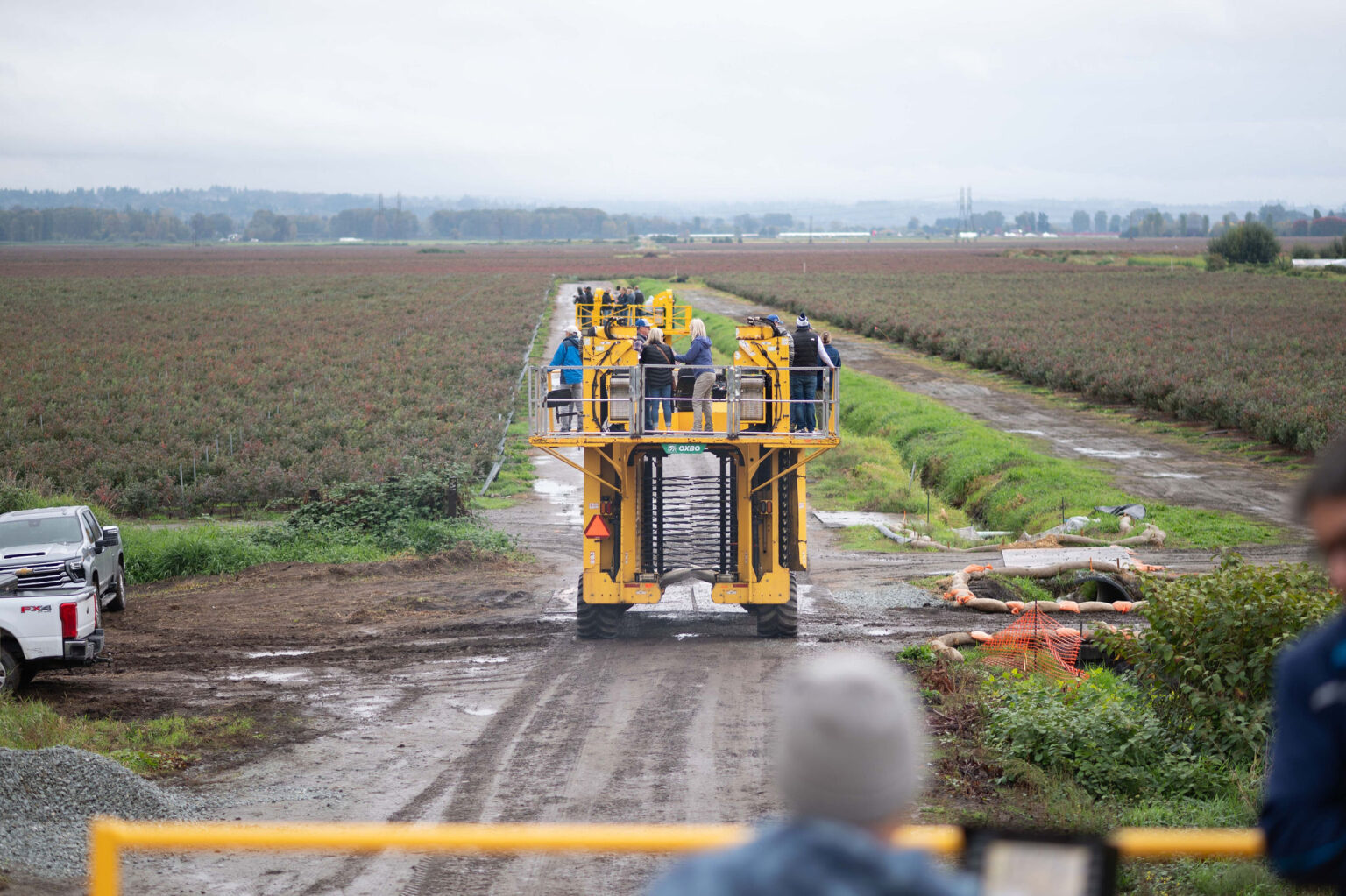
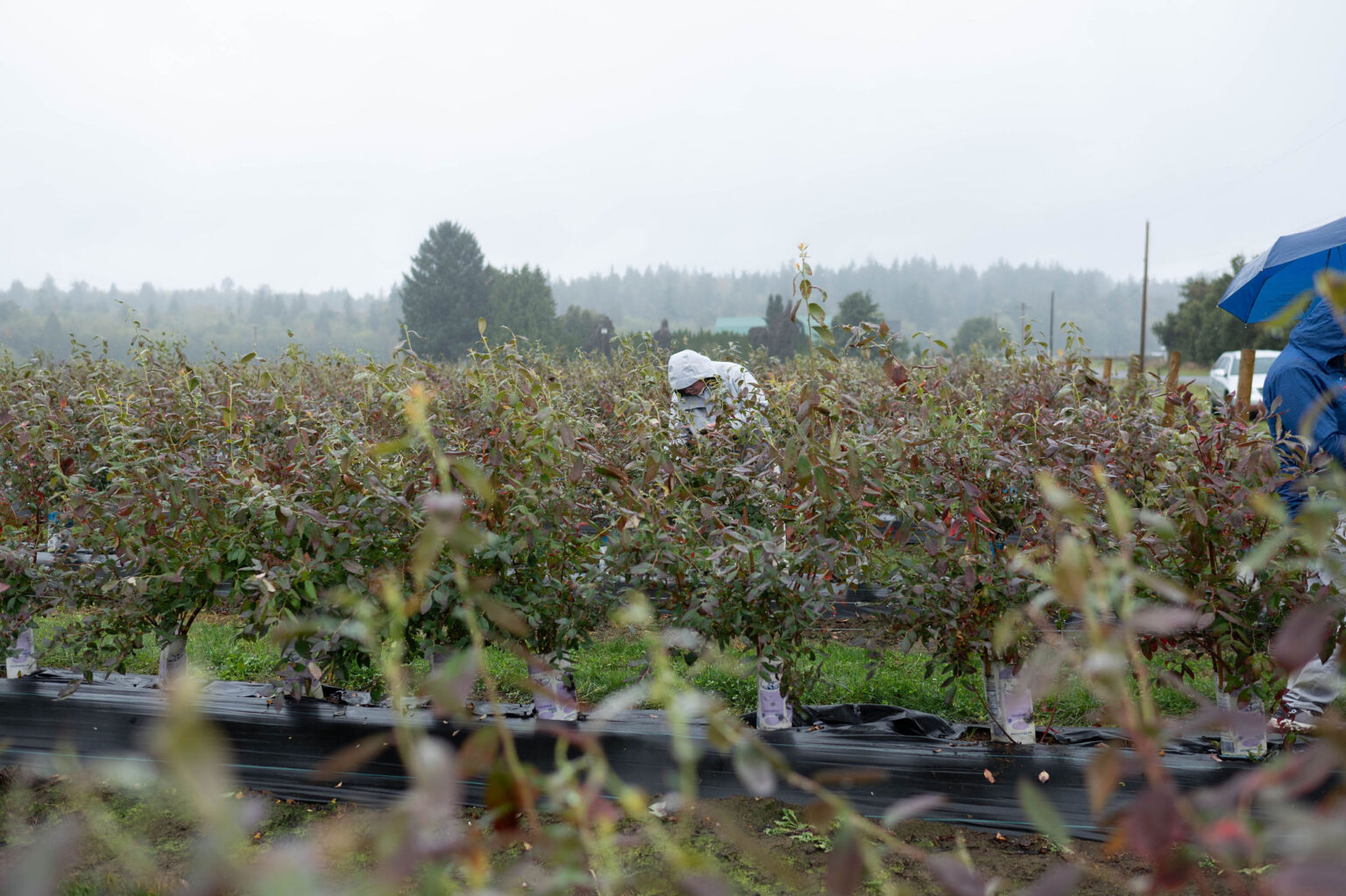
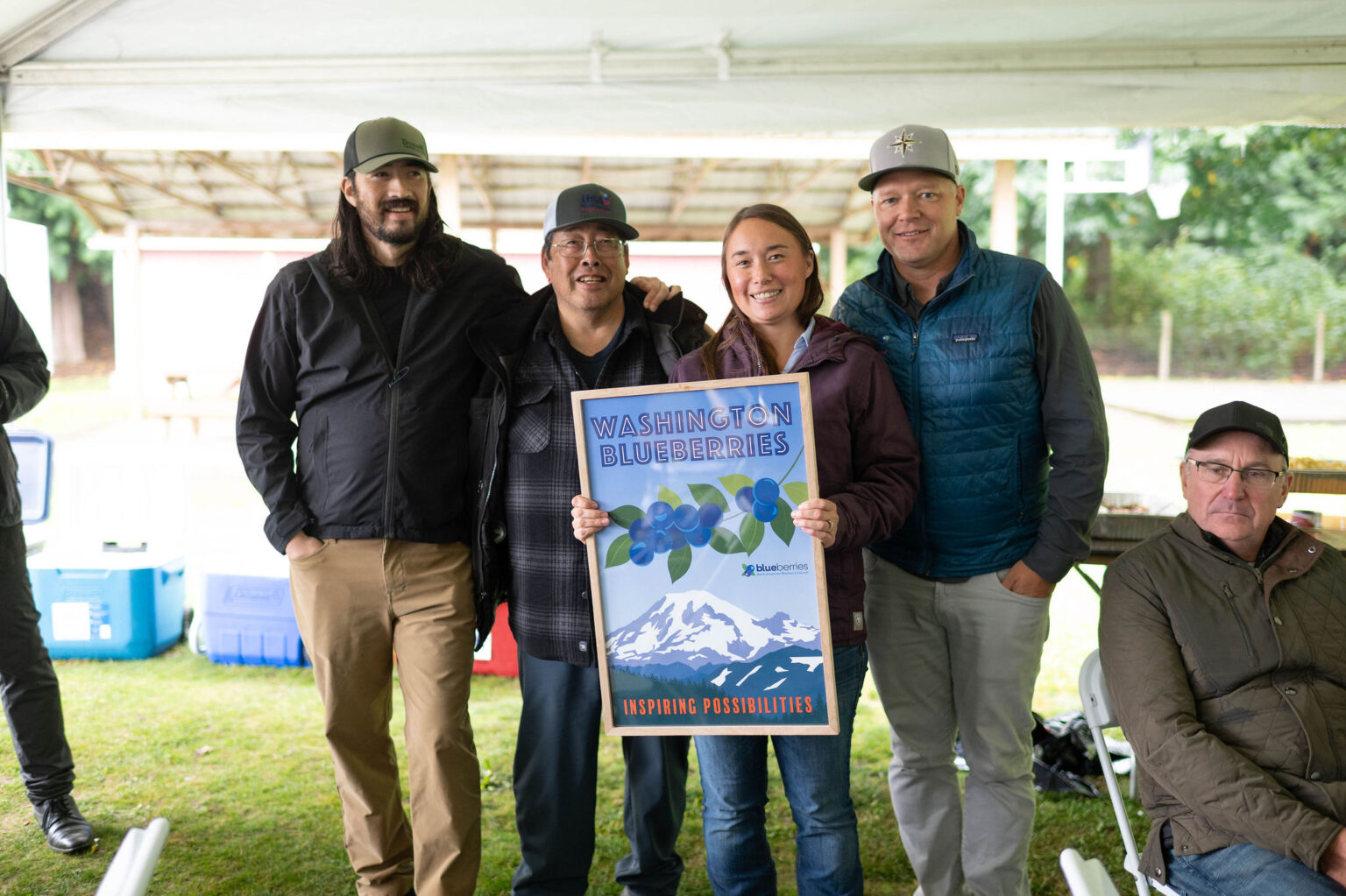
Dozens of Blueberry Convention attendees participated in a farm tour through the heart of Washington’s blueberry country, exploring some of the region’s most innovative and picturesque farms and enjoying a wine-tasting dinner.
Feeling like you missed out? Mark your calendar for our upcoming events: The Blueberry Hill Climb & Industry Meetings, March 2-6, and The 2026 Blueberry Convention, Sept. 22-24, in Monterey, California.
NABC Advocating for Economic Aid to Support Blueberry Growers
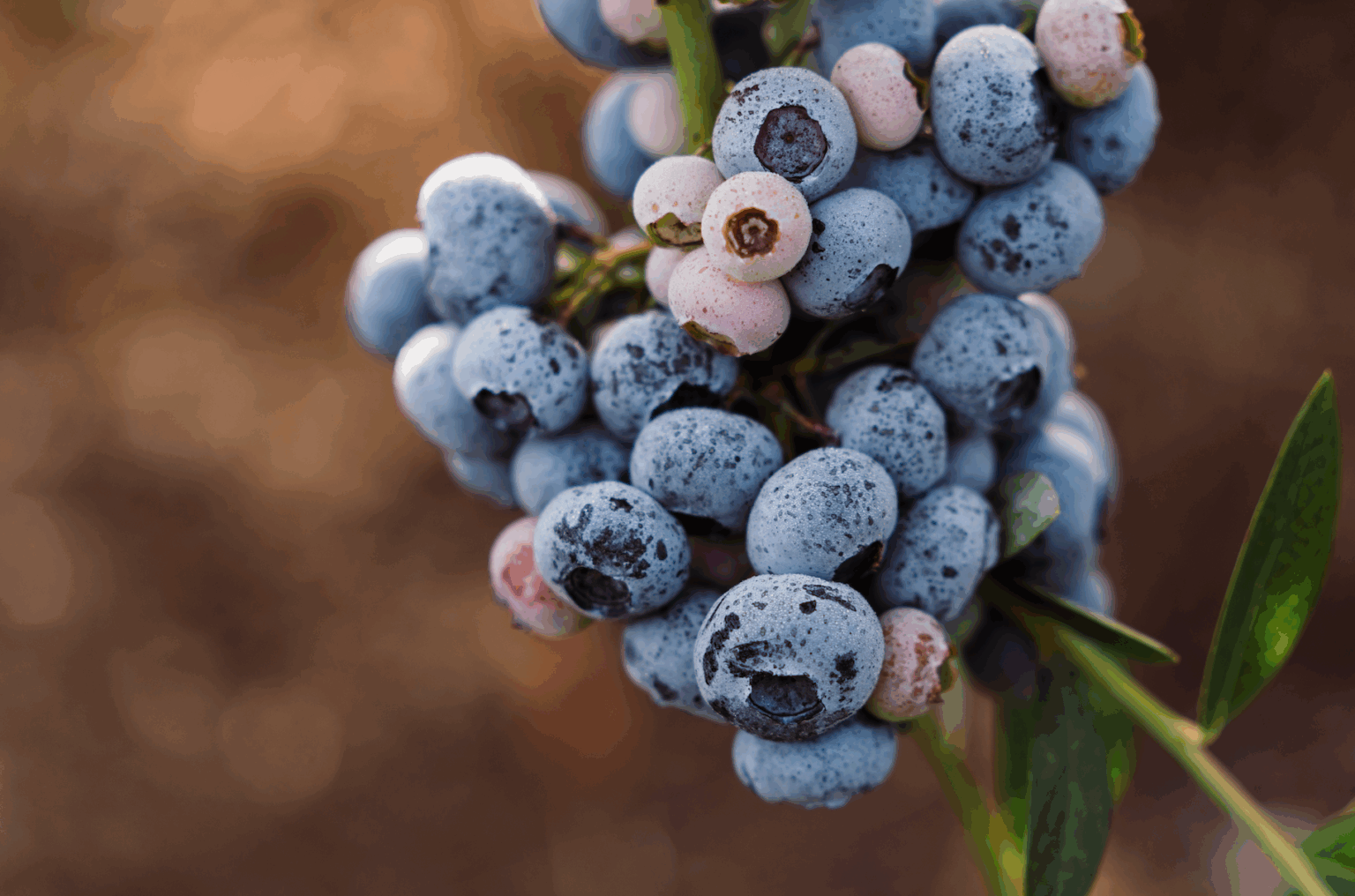
NABC is advocating for federal economic aid to help blueberry growers facing tightening margins due to rising input costs.
The Trump administration has indicated its willingness to provide emergency assistance to farmers, and NABC is working to ensure that blueberry growers are included in any forthcoming relief.
Production costs continue to rise sharply across the industry. From 2021 to 2025, blueberry-producing states saw an average 25% increase in wage rates, with labor now accounting for more than 40% of total production costs. Fertilizer, fuel and packaging expenses have also increased significantly, further eroding profitability.
Recent studies from the University of Michigan and the University of Oregon show that many specialty crop growers are barely breaking even and are increasingly turning to mechanization to stay competitive. These findings highlight the urgent need for economic relief.
NABC is specifically advocating for a direct payment program modeled after the successful Coronavirus Food Assistance Program (CFAP II) and the Marketing Assistance for Specialty Crops Program (MASC), both of which relied on producer data and self-attestation to ensure efficient, timely delivery of aid.
NABC continues to engage with the Administration, USDA and members of Congress to emphasize the importance of including specialty crops in any ad hoc economic assistance.
DOL Announces New AEWR Methodology
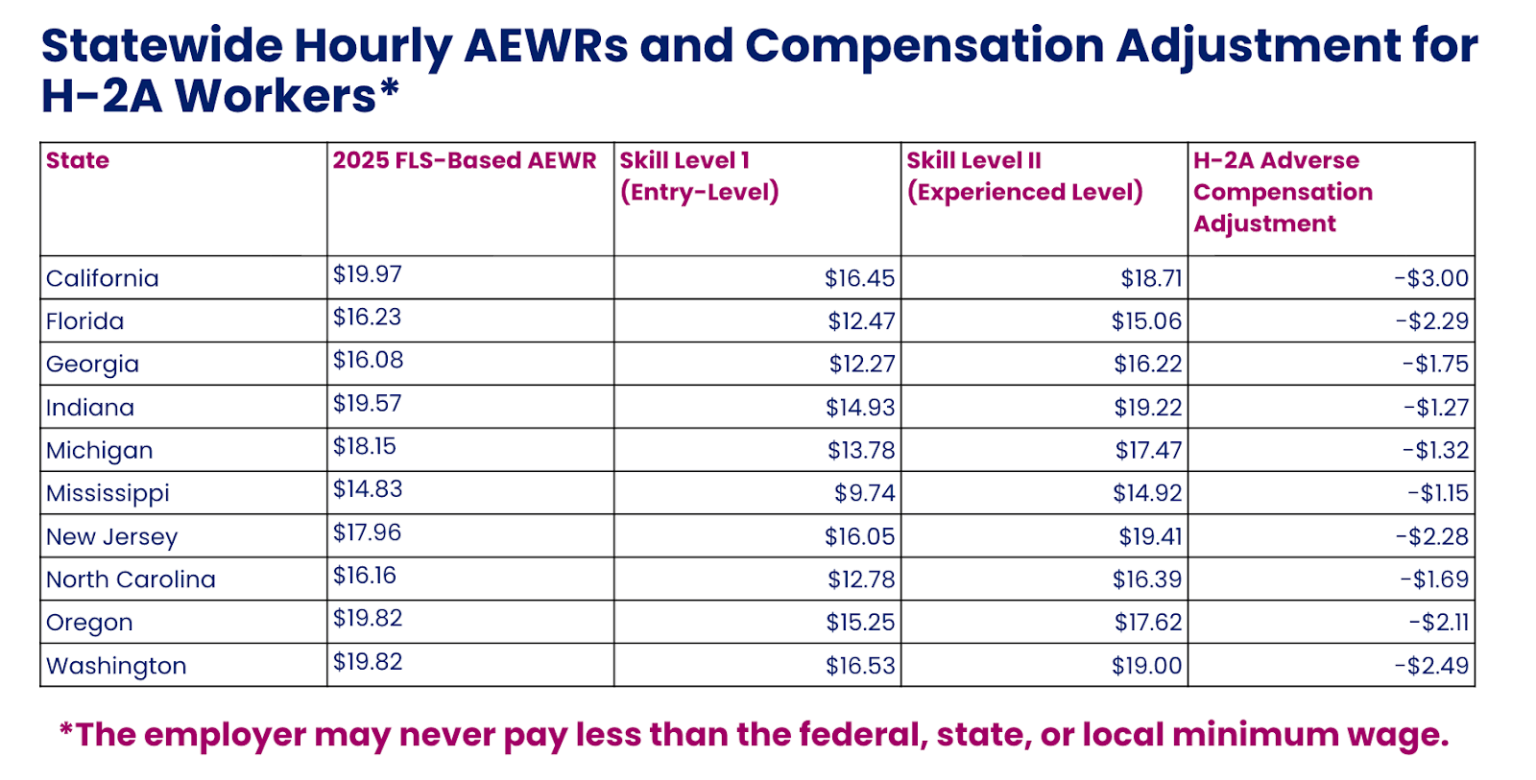
On October 2, the Department of Labor (DOL) issued an Interim Final Rule (IFR) that makes substantive changes to the methodology for calculating the Adverse Effect Wage Rate (AEWR), resulting in a significant reduction in wage rates. DOL states that the IFR will save H-2A employers $2.46 billion annually and $17.29 billion over a 10-year period.
The new methodology applies to new job orders initiated on or after Oct. 2, 2025. The comment period on the IFR ends on Dec. 1, 2025.
We encourage you to review this Frequently Asked Questions Memo from our legal counsel at JPH Law Firm and contact your own legal counsel with specific questions.
The DOL’s IFR makes the following changes to the AEWR methodology:
Two Skill-Based AEWRs for Each State
- DOL will use the average hourly gross wage reported by the Bureau of Labor Statistics’ Occupational Employment and Wage Statistics (OEWS) survey as the sole source of wages for establishing two skill-based AEWRs for each state. The AEWRs cover the five most common agricultural occupations.
- Skill Level I AEWR: Entry-level positions requiring no formal education or specialized training credentials; equal to the 17th percentile of the occupational wage distribution.
- Skill Level II AEWR: Positions requiring demonstrated skills or knowledge through education, training or experience; equal to the 50th percentile of the occupational wage distribution.
- The State Workforce Agency (SWA) and OFLC Certifying Officer (CO) will determine the appropriate AEWR level based on the qualifications contained in the employer’s job offer.
Housing Deduction
- A downward adjustment factor is applied to the AEWRs for H-2A workers provided with housing at no cost.
New Webinar Series Provides Practical Insights into Ag Trade

NABC and the USHBC, in partnership with the Ag Trade Education Council, invite you to participate in our Trade 101 webinar series – a four-part series designed to deepen your understanding of U.S. trade policy and its impact on agriculture, particularly the blueberry industry.
Each one-hour workshop will advance your knowledge on trade policy history, recent trade developments, and blueberry imports and exports. Recordings of the first two sessions are available now, and two more sessions will take place in upcoming weeks.
4 Sessions Provide Practical Insights
Part 1 (Sept. 29): Explore why trade matters to U.S. agriculture and trace the history of trade law and policy from the nation’s founding through 2015. Watch the recording and view the slide deck today.
Part 2 (Oct. 14): Examine key developments in U.S. trade during the different administrations, with a focus on policy shifts and priorities. Watch the recording and view the slide deck now.
Part 3 (Nov. 13): Learn about this year’s trade developments.
Part 4 (Dec. 9): Take a deep dive into how global trade has changed the U.S. blueberry industry, looking at the history, legal challenges and current landscape of blueberry imports and exports.
You’ll walk away with a broad understanding of U.S. trade policy over time and practical insights into how trade directly affects the blueberry industry.
Trade can be complex — but with the right guidance, we can all gain the clarity needed to navigate it more effectively. Register today.
NABC Leads Letter to USDA to Save the Beltsville Agriculture Research Center
In August, USDA Secretary Rollins released a memorandum outlining the department’s proposed reorganization plan. The plan includes consolidating operations, closing the South Building, and relocating approximately 2,600 Washington, D.C.-based positions to five regional hubs: Raleigh, North Carolina; Kansas City, Missouri, Indianapolis, Indiana; Fort Collins, Colorado; and Salt Lake City, Utah.
As we reported in the August newsletter, NABC’s Senior Director of Government Affairs and Public Policy Alyssa Houtby participated in a roundtable discussion hosted by Farm Foundations, a nonpartisan agriculture policy think tank, on the reorganization plan. Additionally, NABC submitted two comment letters. The first focused on general concerns related to USDA employee retention, the importance of maintaining some core USDA functions in Washington, D.C., the proposed locations of the hubs and the critical importance of keeping regional and county FSA and RMA offices open.
The proposed reorganization plan includes vacating the Beltsville Agriculture Research Center (BARC) in Beltsville, Maryland. Current research at BARC underpins blueberry breeding programs nationwide and globally by providing genetic insights, germplasm resources and nutrition science that strengthen grower practices and consumer demand. Because of BARC’s significance to the blueberry industry, NABC led a blueberry coalition letter to USDA, urging the Department to keep BARC open.
The letter highlights that BARC is a hub for Northern Highbush variety development and supports research that addresses region-specific challenges for blueberries in New Jersey, Michigan and Indiana. Additionally, BARC serves as a vital link between the Corvallis repository and breeding programs in New Jersey, Michigan, North Carolina, Mississippi and elsewhere by providing data and evaluations that help breeders identify the most promising traits, such as heat tolerance, drought resistance, pest resistance and improved fruit quality.
The joint letter was sent by NABC, California Blueberry Commission, California Blueberry Association, Michigan Blueberry Advisory Committee, Michigan Blueberry Commission, New Jersey Blueberry Industry Advisory Council, New Jersey Blueberry Growers Association, New Jersey Blueberry Cranberry Research Council, Northwest Berry Foundation, Northwest Center for Small Fruits Research, Oregon Blueberry Commission and the Washington Blueberry Commission.
Click here to read the full letter.
Save the Date for The Blueberry Hill Climb & Industry Meetings
Mark your calendar to attend 2026 Blueberry Hill Climb and Industry Meetings, March 2-6 in Washington, D.C. Registration will open Oct. 31!
The Blueberry Hill Climb is your opportunity to meet with members of Congress and other policymakers about important issues affecting the blueberry industry. We’ll give you all the tips and messaging you need to help us advocate for Ag workforce and H-2A reform; Farm Bill programs, including improvements to disaster assistance programs and risk management tools; and federal nutrition programs that can drive greater blueberry consumption – all things growers need to remain successful and competitive.
This is also a great opportunity to participate in USHBC and NABC committee meetings, network with your peers and learn from engaging speakers.
Want to be front and center with blueberry industry decision-makers attending the hill climb and meetings? Reach out to Mandy Boarman for more information on sponsorship opportunities.
NABC Membership Keeps Growing!
Word keeps spreading about the importance and value of NABC membership! This month, we’re excited to welcome a host of new members:
- Panacea Fruit Company
- Pine Berry Plantation LLC
- Stop and Shop/Ahold USA
Know someone who would benefit from being a member? Invite them to join NABC today!