

In this issue:
- From the Chair: Members, We Need Your Input!
- Board Profile: Ellie Norris, Secretary
- House and Senate Release Long Awaited Farm Bill Proposals
- Nominations Now Open for the NABC Awards
- Blueberry Leadership Program Applications Open Through May 31
- Register for The Blueberry Summit Now to Save!
- NABC Is Inspiring Blueberry Possibilities!
- We’re Here to Help Promote Your Events!
From the Chair: Members, We Need Your Input!

By Pat Goin
NABC Chair
The NABC staff and committee members are laser focused on providing members with the information, support and advocacy they need to succeed in the blueberry industry.
That’s why we’re seeking your valuable input on our member survey! By taking the survey, you’ll be helping ensure we’re serving you in the ways you prefer and providing the benefits that are most important to you.
The survey takes just a few minutes to complete and will be incredibly helpful in guiding NABC’s efforts on behalf of members.
Thank you in advance for helping us create an organization that serves you best!
Board Profile: Ellie Norris, Secretary

1. What was your first job in blueberries?
My first job in blueberries was selling fresh blueberries at our family stand at the local farmers market.
2. What makes you passionate about the industry?
I love engaging with and connecting with industry people. The technology aspect is both new and innovative, and will streamline and advance farming. Trade also helps family farming be involved on a global scale.
3. What do you love about your job?
What I love most about my job is getting my hands dirty daily, engaging with my employees
and working alongside them.
4. What’s one of your goals for being on the board?
One of my goals for being on the board is to represent individuals, be a voice and advocate for growers, both regionally and nationally.
5. If you weren’t in the blueberry business, what would you be doing?
I would be a marine biologist if I weren’t in the blueberry business. I studied biology and chemistry, with a marine bio background, at OSU and worked at the Monterey Bay Aquarium in Monterey, California.
House and Senate Release Long Awaited Farm Bill Proposals
Earlier this month, House Ag Committee Chair G.T. Thompson and Senate Ag Committee Chair Debbie Stabenow released their respective Farm Bill proposals, both of which provide significant new investments for specialty crops in the areas of research, mechanization and automation, crop insurance, disaster programs and trade development. NABC applauds Chair Thompson and Chair Stabenow for their tireless support of specialty crops and their efforts to advance a Farm Bill that includes many of the industry’s policy recommendations.
The House Ag Committee is scheduled to begin markup on May 23. Chair Thompson’s bill, The Farm, Food and National Security Act, is largely bipartisan when it comes to the farm policy provisions. However, the bill includes potentially large cuts to SNAP, which many Democrats – particularly those in leadership – vehemently oppose as a means to offset additional investments in the agriculture titles. Additionally, the bill would eliminate the USDA Secretary’s discretionary authority over the Commodity Credit Corporation (CCC) – the source of funding for emergency agriculture programs. The CCC is historically used for commodity purchases, trade mitigation programs, foreign market development programs, and pest and disease response activities.
It’s unclear if the House Ag Committee will be able to come to an agreement on the controversial “pay-for” provisions and send a bipartisan bill to the floor. It is clear, however, that the chair’s bill, as is, has no path forward in the Senate. In fact, Leader Schumer stated on the Senate floor, “Passing a Farm Bill has always been – and must be – bipartisan. … A purely partisan bill that departs from the longstanding spirit of bipartisan cooperation, unfortunately, will not have a future in the Senate.”
On the Senate side, Chair Stabenow released a detailed summary of her bill, The Rural Prosperity and Food Security Act, but has not yet released legislative text, indicating that her committee will not proceed with a mark up until there is bipartisan agreement and a clear pathway for success.
The House Ag Committee markup is a long-awaited and important first step toward passing a Farm Bill this year. While there is still a long way to go before the Farm Bill is done, we are optimistic that both chambers will come to an agreement before the end of the year.
Summary of Key Provisions for the Blueberry Industry:
House Farm Bill: “Farm, Food and National Security Act”
Title I: Commodities
- Tree Assistance Program (TAP)
- Eliminates mortality threshold (currently 15%).
- Increases the reimbursement rate for rehabilitation to 65% (currently 50%).
- May use funds to plant an alternative variety, stand density; or location.
- FSA must notify the applicant of approval or denial within 120 days of receiving an application for assistance.
- Disaster Assistance Block Grants – In the case additional funds are made available, the Secretary may provide disaster assistance funds in the form of block grants.
- Adjusted Gross Income Limits – Removes AGI limits for Title I disaster programs, including TAP and NAP (and conservation programs in Title II).
Title III: Trade
- Technical Assistance to Improve Foreign Market Infrastructure – Authorizes $1 million per year for the USDA Secretary to enter into contracts or other agreements with eligible trade organizations to enhance the capabilities of infrastructure in new and developing foreign markets.
- Report on Competitiveness of U.S. Specialty Crops – Directs the USDA Secretary and the U.S. Trade Representative to submit to Congress every two years a report detailing the competitiveness of U.S. specialty crops.
- Trade Promotion – Doubles funding for the Market Access Program (MAP) and the Foreign Market Development Program (FMD).
Title IV: Nutrition
- Gus Schumacher Nutrition Incentives Program (GusNIP)
- Waives the 50% matching funds requirements for projects in counties where 20% of the population is living below the poverty line.
- Increases year-round availability of incentives by offering all forms of fruits or vegetables.
- Transitions the Produce Prescription Program from USDA to the Department of Health and Human Services.
- Increases funding from $56 million per year to $75 million per year.
Title VII: Research
- High Priority Research Areas – Adds Spotted Wing Drasophila (SWD) as a high-priority research area for research and extension grants.
- Specialty Crop Research Initiative (SCRI) – Increases funding from $80 million per year to $175 million per year, inclusive of $45 million in set asides.
- Mechanization and Automation – Creates a new program within SCRI for specialty crop mechanization and automation research; includes a set aside of $20 million per year.
Title X: Horticulture
- Plant Pest and Disease Management and Disaster Prevention – Increases funding from $75 million per year to $90 million per year for early plant pest detection and surveillance, including the Clean Plant Network.
- Specialty Crop Block Grant (SCBG) – Increases funding from $85 million per year to $100 million per year; requires state departments of agriculture to explain to USDA how it will outreach and consult with producers and producer groups when determining funding priorities.
Title XI: Crop Insurance
- Specialty Crop Advisory Committee – Establishes a Specialty Crop Advisory Committee to advise the manager of the FCIC on issues relating to specialty crop insurance policies and provide recommendations regarding the presentation of policies to the board.
- Coverage of Revenue Losses – Affirms that a decline in the market price of the insured commodity, so long as such decline was not directly caused by the producer, qualifies for coverage.
- Coverage Enhancements – Premium subsidy for area Supplemental Coverage Option is increased from 65% to 80%.
- New Revenue Policies – Directs the FCIC to carry out research and development of at least one new revenue policy per year for crops for which only individual yield-based insurance policies are available.
- Stand-Alone Policy for Hurricanes and Tropical Storms – Directs the FCIC to determine the feasibility of offering a stand-alone policy against tropical storms or hurricanes.
- Frost or Cold Weather Insurance – Directs the FCIC to carry out research and development of an index-based policy to insure crops on a nationally available basis against losses due to a frost or cold weather event.
Title XII: Miscellaneous
- Farm Labor Survey – Requires USDA to issue a report examining the quality of the farm labor survey, including actions that can be taken by the Secretary to increase the response rate and improve the statistical soundness, and the impacts of labor costs on agricultural employers.
Senate Farm Bill: “Rural Prosperity and Food Security Act” (according to detailed summary)
The Senate proposal is largely similar to the House bill in the aforementioned areas. Key differences are:
- TAP reforms are included as proposed in the “Protecting America’s Orchardists Act.” The increased cost-share for rehabilitation is not included.
- Authorizes a permanent standing disaster program to provide a consistent framework for potential future ad hoc funding from Congress, whereas the House version adopts a block grant approach to disaster assistance.
- SCRI is increased by $50 million per year, including a $10 million per year set aside for mechanization and automation.
- The SCBG program is increased by $10 million per year, whereas the House provides an additional $15 million..
- Current MAP and FMD funding levels are maintained, whereas the House version doubles funding for these programs.
- Increases funding for GusNIP by $750 million over 10 years, whereas the House version provides $95 million over 5 years.
Nominations Now Open for the NABC Awards
The nomination period for the annual NABC Awards is now open. This is your chance to help us recognize blueberry industry luminaries who have made a lasting impact.
Learn about each award, then submit your nominations by June 28:
Hall of Fame Award
The NABC Hall of Fame Award celebrates blueberry leaders, growers and suppliers who have impacted the blueberry industry in North America. The award is the council and industry’s highest honor, and is open to influential leaders, past and present. Selection is based on candidate attributes in leadership, collaboration, industry support, longevity and innovation.
The Alex Wetherbee Award
The Alex Wetherbee Award recognizes outstanding contributions to the blueberry industry in marketing and promotion. Alex Wetherbee was one of NABC’s founders and a blueberry marketer from New Jersey who was respected industry-wide for his passion in promoting blueberries. Let us know who you think is carrying on these efforts!
The Duke Galletta Award
The Duke Galletta Award recognizes excellence in blueberry horticultural research. The award is named in honor of Duke Galletta of Atlantic Blueberry, an inaugural member of the NABC. Galletta was very involved in blueberry varietal development and worked with USDA plant breeders, allowing them to set up test plots on Atlantic Blueberry land. Tell us about others in the industry who are leaders in horticultural research!
This year’s winners will be honored at The Blueberry Summit, Sept. 25-27 in Denver.
Learn more, then send in your nominations! NABC Awards – NABC (blueberry.org)
Blueberry Leadership Program Applications Open Through May 31
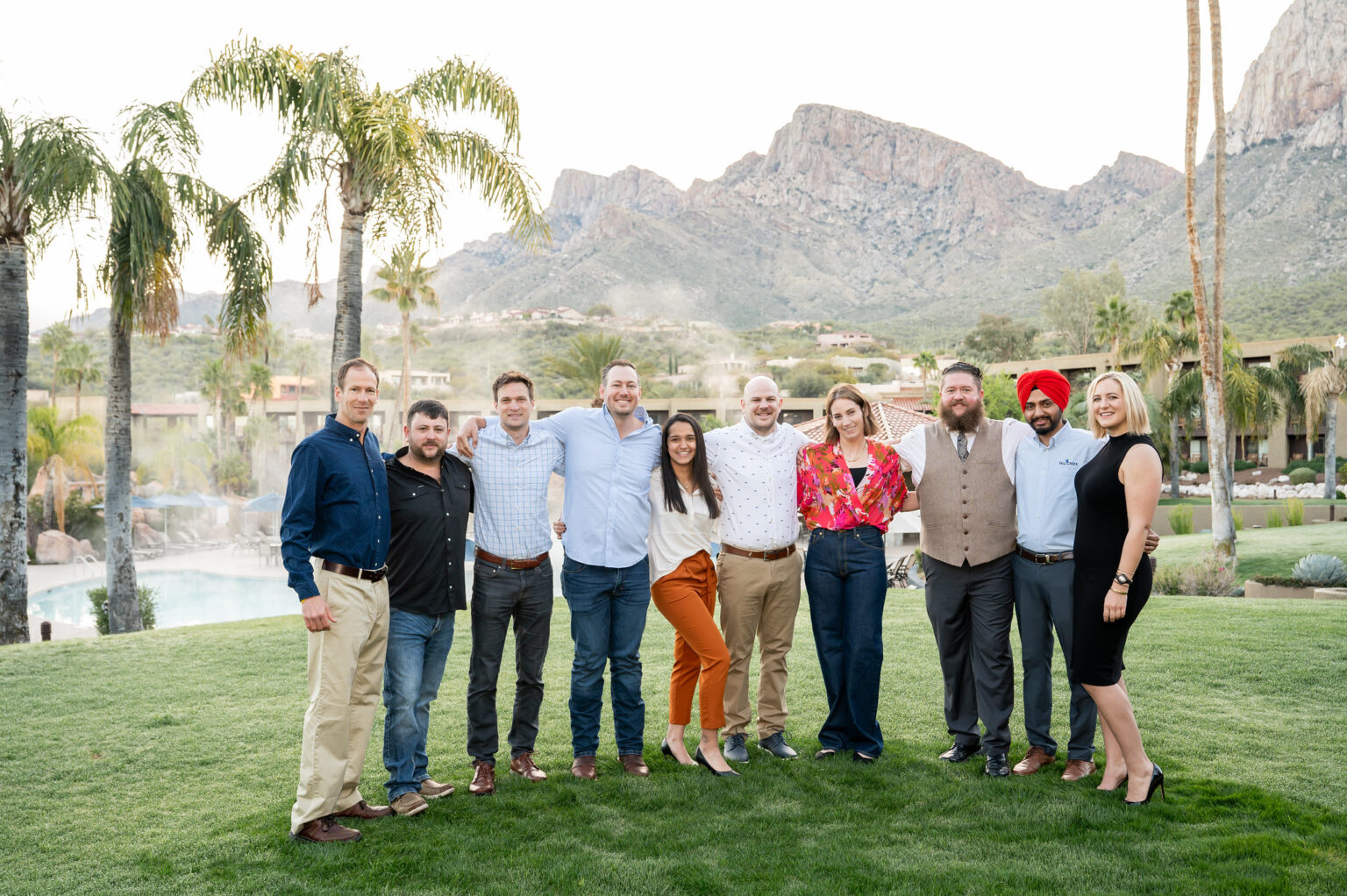
The application process for the third class of the U.S. Highbush Blueberry Council’s (USHBC) Blueberry Leadership Program is now open. The program will accept up to 10 talented, passionate professionals from across the supply chain to become the next group of fellows.
The training – the first of its kind in the blueberry industry – helps fellows grow their leadership skill set, learn from decades-long industry leaders and develop a network of connections.
Class 3 of the leadership program will kick off in September at The Blueberry Summit and continue through next year, taking an interactive approach to leadership development through hands-on training, immersive learning experiences, engagement with key industry players and exposure to the many components of the produce supply chain.
Fellows will participate both virtually and in person, traveling four times over the course of the curriculum between September 2024 and September 2025, with a graduation ceremony taking place at the 2025 Blueberry Summit.
USHBC is seeking applicants who are up-and-coming leaders, hold a mid-level management position and have a minimum of five years experience in agriculture, with preference given to those who have worked in the blueberry industry.
The deadline to apply is May 31. Applications will be reviewed and evaluated by the USHBC Industry Leadership Program Selection Committee, composed of USHBC council members and industry representatives. Top candidates will be interviewed throughout June and July.
Register for The Blueberry Summit Now to Save!
The schedule and exciting networking events at The Blueberry Summit, Sept. 25-27 in Denver, are coming into focus! Check out the full event schedule, then start planning your experience.
You’ll save big when you register by Aug. 27 with early-bird pricing. And save even more when you reserve your hotel room within our discounted room block, also by Aug. 27.
You’ve got to be there to hear from blueberry industry thought leaders, connect with your peers, learn during educational sessions – and have some fun!
Sign up to attend along with three three colleagues by June 30 to be entered into a raffle for four tickets to a Colorado Rockies game on the evening of Sept. 28!
NABC Is Inspiring Blueberry Possibilities!


We’re Here to Help Promote Your Events!
If you’re hosting a blueberry industry event, we’d love to get the word out. Email Kristy Babb at [email protected] with all the details and we’ll include your event in our next newsletter.