
Topics in this issue of Blues Update:
- From the Chair: Here’s Your Chance to Make a Difference
- Call to Action: Ask USDA to Keep the Beltsville Agricultural Center Open!
- What Do the Recent Actions by DOL and USDA Mean for H-2A Wage Rates?
- In-Person Interview Waivers for H-2A Visa Applicants
- Bipartisan Lawmakers Call on Administration to Eliminate Trade Barriers for U.S. Blueberries
- New Webinar Series Provides Practical Insights into Ag Trade
- Tariff Update: Executive Order Authorizing Potential Adjustments
- South Africa Grants Access for U.S. Fresh Blueberries
- Houtby Promoted to Sr. Director of Government Affairs, Public Policy
- Apply to be an NABC Volunteer by Oct. 13!
- Nominations for the NABC Board Are Open Through Sept. 26
- There’s Still Time to Register for The Blueberry Convention, Oct. 8-10
- We’re Welcoming New Members
From the Chair: Here’s Your Chance to Make a Difference
By Teddy Koukoulis
NABC Chair
If you’ve ever wanted to help drive the success and profitability of our industry, here’s your chance. Applications are now open for positions on NABC committees and task forces. And today is the last day to send in nominations for the NABC Board of Directors. Read more below and send in your nominations!
By volunteering for the NABC, you’ll elevate the voice of the blueberry industry and be among the industry leaders who are helping us navigate today’s challenges, so we can ensure a successful future for the blueberry industry.
Along the way, you’ll also make new connections, enhance your leadership skills and make a real difference in our member-driven organization.
Why not jump in? Learn more below and submit your application for a committee or task force by October 13.
Call to Action: Ask USDA to Keep the Beltsville Agricultural Center Open!
The USDA has proposed closing the Beltsville Agricultural Research Center (BARC) in Maryland as part of its broader reorganization plan.
For decades, BARC has been an integral part of blueberry research in the United States, providing genetic insights, germplasm resources and nutrition science that strengthen grower practices and consumer demand. Closing BARC would dismantle an irreplaceable system of data collection, technology and laboratory resources that blueberry scientists rely on to deliver real world solutions for growers.
BARC is part of USDA’s National Clonal Germplasm Repository for Vaccinium, which preserves the genetic diversity of blueberries and related species. While the living repository is located in Corvallis, Oregon, USDA scientists at BARC provide the genetic characterization that makes this material usable for breeders. BARC serves as a vital link between the Corvallis repository and breeding programs in New Jersey, Michigan, North Carolina, Mississippi and beyond by delivering data and evaluations that help breeders identify the most promising traits such as heat tolerance, drought resistance, pest resistance and improved fruit quality. Without BARC, the USDA Vaccinium germplasm repository would be a static collection rather than a driver of industry innovation.
And because of its Maryland location, BARC is uniquely positioned to advance Northern Highbush variety development, and tackle region-specific challenges for blueberries in New Jersey, Michigan and Indiana.
Take Action!
NABC, in partnership with state blueberry associations, is urging USDA to keep BARC open – and we encourage you to do the same. Please submit your feedback on the department’s reorganization plan by emailing [email protected] before the September 30 deadline. A sample message is provided below to make it easy for you to share your comments.
For questions, please contact Alyssa Houtby.
Sample Message to USDA (Email: [email protected])
Dear Secretary Rollins,
On behalf of [insert your farm/business name], I write to express my deep concern with the department’s plan to vacate the Beltsville Agricultural Research Center (BARC), as outlined in Secretary Memorandum SM 1078-015.
BARC is the birthplace of the cultivated blueberry industry and continues to play a vital role in USDA’s blueberry breeding program. Research conducted there provides growers across the country with improved varieties, advanced breeding tools and specialized lab resources unavailable elsewhere.
Closing BARC would undermine decades of progress and risk the loss of invaluable institutional knowledge if USDA scientists choose not to relocate. This would weaken the ability of U.S. blueberry growers to remain competitive. Now more than ever, we need USDA’s continued leadership and investment in research and innovation.
For these reasons, I respectfully urge you to keep BARC open. Thank you for your leadership and for your commitment to American agriculture.
Sincerely,
[Your Name]
[Farm/Business Name]
[City, State]
What Do the Recent Actions by DOL and USDA Mean for H-2A Wage Rates?
On August 27, the U.S. Department of Labor (DOL) announced that the U.S. District Court for the Western District Court of Louisiana had vacated the Biden Administration’s 2023 Adverse Effect Wage Rate (AEWR) Rule, which created different wage rates for certain job categories For most agriculture jobs, the AEWR continued to be set using the Farm Labor Survey (FLS), but for other job categories such as truck drivers and supervisors, the wage rate was set using the Occupational Employment and Wage Statistics Survey (OEWS). If a worker’s tasks spanned multiple categories, the employer had to pay the highest AEWR applicable to any of the duties performed.
As a result of the court decision, DOL reverted to the pre-2023 methodology of establishing one AEWR across all H-2A job categories AEWR based on the FLS.
But just two days later, on August 29, USDA announced it would discontinue the FLS, noting that without the FLS, DOL could instead rely on OEWS data to establish H-2A wage rates going forward.
The combined impact of these actions on future AEWR calculations is still uncertain. For current H-2A workers, no changes to 2025 wage rates are expected. Looking to 2026, much will depend on how the DOL determines the AEWRs in the absence of the FLS.
DOL is expected to issue a new rule before the end of the year outlining how the AEWRs will be calculated going forward. The agency has already submitted a proposed “interim final rule” to the White House Office of Management and Budget (OMB) for review.
While the details are not yet public, an interim final rule would be effective immediately upon publication, while still allowing stakeholders to submit comments that may inform future revisions to the rule. This differs from the more typical process where a proposed rule is released for public comment, those comments are considered by the agency, and then a final rule is published and goes into effect.
NABC is actively engaging with OMB as a part of this process to ensure the voice of the blueberry industry is heard and to advocate for meaningful reforms to the H-2A program.
In-Person Interview Waivers for H-2A Visa Applicants
Effective October 1, the Department of State will update the categories of applicants that may be eligible for a waiver of the nonimmigrant visa interview. All nonimmigrant visa applicants, including applicants under the age of 14 and over the age of 79, will generally require an in-person interview with a consular officer except:
- Applicants classifiable under the visa symbols A-1, A-2, C-3 (except attendants, servants or personal employees of accredited officials), G-1, G-2, G-3, G-4, NATO-1 through NATO-6 or TECRO E-1.
- Applicants for diplomatic- or official-type visas.
- Applicants renewing a B-1, B-2, B1/B2 visa or Border Crossing Card/Foil (BBBCC/BBBCV for Mexican applicants) within 12 months of the prior visa’s expiration when the prior visa was issued for full validity at the time of issuance and the applicant was at least 18 years old.
- Applicants renewing an H-2A visa within 12 months of the prior visa’s expiration when the prior visa was issued for full validity at the time of issuance and the applicant was at least 18 years old.
To be eligible for an interview waiver, applicants must also meet certain criteria, including that they:
- Apply in their country of nationality or usual residence (except diplomatic and certain official visa applicants).
- Have never been refused a visa (unless such refusal was overcome or waived).
- Have no apparent or potential ineligibility.
Consular officers may still require in-person interviews on a case-by-case basis for any reason. Applicants should check embassy and consulate websites for more detailed information about visa application requirements and procedures, and to learn more about the embassy or consulate’s operating status and services.
This supersedes the Interview Waiver Update of July 25.
Bipartisan Lawmakers Call on Administration to Eliminate Trade Barriers for U.S. Blueberries
A bipartisan group of lawmakers led by Reps. Rick Larsen (D-WA-02) and Dan Newhouse (R-WA-04) is urging the U.S. Trade Representative (USTR) to prioritize the U.S. blueberry industry as part of the administration’s broader efforts to eliminate tariff and nontariff barriers, and reduce the national trade deficit.
In a letter to USTR Ambassador Jamieson Greer and USDA Secretary Brooke Rollins, 25 members of Congress representing blueberry producers nationwide pointed to trade barriers in Japan, Korea and Vietnam that have limited market growth and made it more difficult for U.S. blueberries to compete.
Japan currently imposes a 9.6% tariff on frozen U.S. blueberries. Lawmakers noted that this has caused American exports to decline, while global competitors, including Canada and the European Union, have gained market share.
In Vietnam, U.S. blueberries face steep tariffs that lawmakers said must be reduced or eliminated in order for the industry to realize the “significant room for growth in this market.”
In Korea, a longstanding market access request for fresh blueberries from California and Washington remains outstanding. The letter urges the administration to “communicate to Korea’s trade negotiators the importance of rapidly reviewing and approving market access requests.”
The North American Blueberry Council (NABC) applauded the letter and bipartisan call for action.
“We strongly support the bipartisan congressional letter urging the administration to address longstanding trade barriers in key markets like Japan, Korea and Vietnam,” said Kasey Cronquist, president of NABC. “Eliminating these barriers will expand opportunities for family farmers, strengthen the agricultural economy and ensure the U.S. blueberry industry can thrive globally. We thank Reps. Larsen and Newhouse for championing fair access to export markets on behalf of blueberry growers nationwide.”
Chad Don of Oasis Farms in Prosser, Washington, and an NABC board member, added, “As a Washington blueberry grower, I strongly support the administration’s engagement on export priorities for our industry. Our state is one of the nation’s leading blueberry producers, and access to strong export markets is critical to maintaining healthy prices and sustaining family farms. Addressing Japan’s tariff on frozen blueberries, securing access for fresh blueberries into Korea and lowering Vietnam’s high tariff rates are all essential steps to ensure Washington fruit remains competitive against global suppliers. These actions will not only strengthen farmgate returns for growers but also support rural jobs and highlight the premium quality and reliability of Washington blueberries to consumers around the world.”
Bryan Sakuma of Sakuma Brothers Farms and Processors shared his support of the letter as well. “As a third-generation Washington farmer, I’m proud to continue my family’s legacy of supplying high-quality blueberries to consumers worldwide, including Japan, where my family heritage lies. U.S. blueberries are among the best in the world, and I am optimistic that longstanding barriers in markets like Japan, Korea and Vietnam can finally be addressed. Doing so will open new opportunities for growers, strengthen the farm economy and help reduce our agricultural trade deficit. I thank Rep. Larsen for his steadfast support of Washington blueberries and farm families like mine.”
New Webinar Series Provides Practical Insights into Ag Trade
NABC and the U.S. Highbush Blueberry Council (USHBC), in partnership with the Ag Trade Education Council (ATEC), invites you to join the Trade 101 webinar series – a four-part series designed to deepen your understanding of U.S. trade policy and its impact on agriculture, particularly the blueberry industry.
Each one-hour workshop will advance your knowledge on trade policy history, recent trade developments, and blueberry imports and exports. You’ll walk away from the series with a broad understanding of U.S. trade policy over time and practical insights into how trade directly affects the blueberry industry.
Part 1 (Sept. 29): Explore why trade matters to U.S. agriculture and trace the history of trade law and policy from the nation’s founding through 2015.
Part 2 (Oct. 14): Examine key developments in U.S. trade during different administrations, with a focus on policy shifts and priorities.
Part 3 (Nov. 13): Review the latest trade developments of 2025, including tariffs, trade agreements and legal challenges to presidential authority.
Part 4 (Dec. 9): Take a deep dive into how global trade has changed the U.S. blueberry industry, looking at the history, legal challenges and current landscape of blueberry imports and exports.
Learn more and register today.
Tariff Update: Executive Order Authorizing Potential Adjustments
On September 5, President Trump signed an Executive Order authorizing potential tariff adjustments of specified products for “aligned partners.”
The Executive Order states, “Though I am generally unwilling for framework agreements to narrow the scope of the reciprocal tariffs … final agreements with the United States may include such modifications. My willingness to reduce the reciprocal tariff to zero percent for a given import … will depend on numerous factors, including the scope and economic value of a trading partner’s commitments to the United States in its agreement on reciprocal trade, the national interests of the United States, the need to deal with the national emergency.”
Annex III of the Executive Order, titled “Potential Tariff Adjustments for Aligned Partners,” lists products that are eligible for a tariff adjustment in a final agreement. These include certain agricultural products not produced in sufficient quantities domestically to meet U.S. demand. Notably, blueberries are not listed in Annex III.
Separately, on August 29, the U.S. Court of Appeals for the Federal Circuit ruled that the International Emergency Economic Powers Act does not authorize the president to impose reciprocal tariffs.The Supreme Court has agreed to hear the case on an expedited basis, with oral arguments expected in November 2025 and a possible decision by December. Should the Supreme Court uphold the lower court’s ruling, importers may be eligible to receive tariff refunds.
We’ll continue to monitor these developments closely and keep you informed of any changes that could affect the blueberry industry.
South Africa Grants Access for U.S. Fresh Blueberries
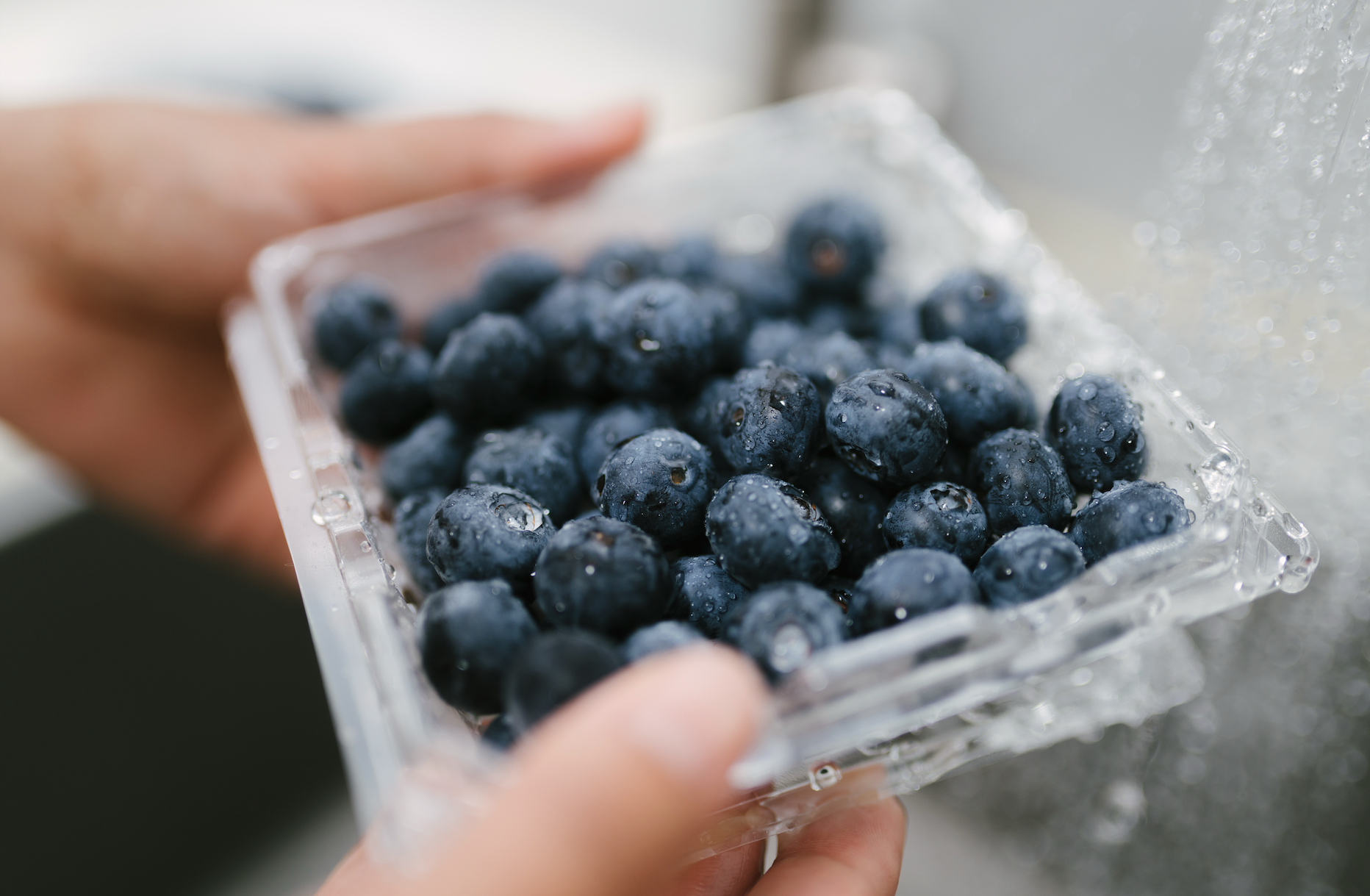
South Africa has officially approved market access for fresh blueberries from all U.S. states.
All facilities intending to ship to South Africa must register. This market will be added to the comprehensive facility registration form that the USHBC publishes every September for the following season. Exporters should watch for an email next month with facility registration details.
If you’re interested in shipping during the 2025 season, please contact NABC/USHBC Senior Director of Government Affairs and Public Policy Alyssa Houtby as soon as possible.
After years of stalled progress, we thank the Trump administration for prioritizing this request and opening the South Africa market for U.S. fresh blueberries. We’re grateful to the dedicated team at USDA’s Animal and Plant Health Inspection Service (APHIS) for their collaboration and for securing a science-based and practical work plan for blueberry growers and packers.
Although South Africa’s blueberry market has evolved significantly since the original access request, NABC and USHBC remain optimistic about the opportunities this market presents. We believe strongly in the importance of open, science-based trade, and will continue working to expand and strengthen global market access for U.S. blueberry growers.
To learn more about NABC’s market access efforts, contact Senior Director of Government Affairs and Public Policy Alyssa Houtby. For information on USHBC’s market development programs, contact Director of Global Business Development Haiying Zhang.
History of the Request for Access
This milestone was made possible through nearly a decade of collaboration among NABC, USHBC, the California Blueberry Commission, Oregon Blueberry Commission and Washington Blueberry Commission. We also thank Rufus Isaacs, Ph.D., of Michigan State University for his technical guidance on the operational work plan, and our partners at Bryant Christie Inc., whose support was instrumental in advancing this request.
Houtby Promoted to Sr. Director of Government Affairs, Public Policy
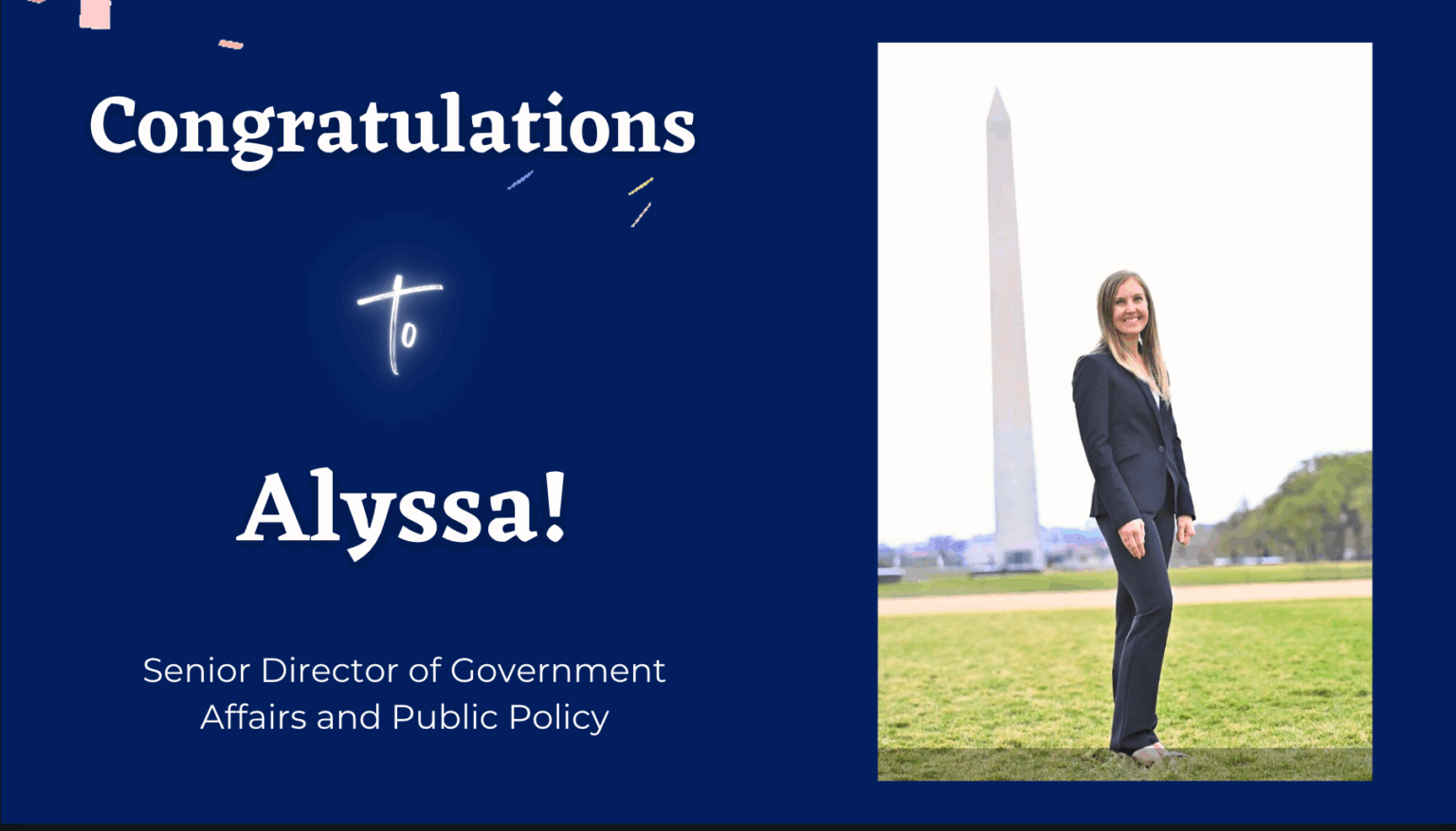
In recognition of her vision, leadership and tireless dedication to NABC and USHBC, Alyssa Houtby has been promoted to Senior Director of Government Affairs and Public Policy.
Alyssa joined the blueberry industry in 2023 as Director of Government Affairs and has dramatically elevated the relevance and influence of our work in Washington, D.C., while also building strong connections with our growers and industry stakeholders at the grassroots level.
In her new role, she’ll lead both NABC and USHBC into a new chapter of growth, success and visibility for blueberries on behalf of our growers and industry stakeholders.
Please join us in congratulating Alyssa!
Apply to be an NABC Volunteer by Oct. 13!
Applications to serve on an NABC committee are now open! This is your chance to play an active role in furthering the success of the blueberry industry.
We’re seeking volunteers for the following committees:
- Awards
- Bylaws
- Finance
- Government Affairs
- Trade Task Force
- USDA Foods Procurement Task Force
This is an excellent opportunity for passionate members of our community to increase their participation in NABC and help elevate the voice of the industry. People of all backgrounds and industry experience are encouraged to apply.
Get more information on the appointment process and apply here.
Applications are due October 13, and new committee members will be officially seated on Jan. 1, 2026.
Have questions? Reach out to NABC Vice President of Industry Engagement and Education Amanda Griffin at [email protected]
Nominations for the NABC Board Are Open Through Sept. 26
The nomination period for several positions on the NABC Board of Directors is open through September 26. A total of eight positions are open, with service starting immediately and ending in 2027.
This is your chance to help lead the blueberry industry during an unprecedented era of innovation and expand your leadership skills!
Open voting member positions:
– (1) U.S. North American Grower
– (1) Mexican North American Grower
– (2) North American Distributors
Open non-voting member positions:
– (1) International Grower
– (1) International Distributor
– (1) Supplier
– (1) Retail, Foodservice or School Program Member
Have questions? Please reach out to NABC Vice President of Industry Engagement and Education Amanda Griffin at [email protected].
Send in your nominations by September 26!
There’s Still Time to Register for The Blueberry Convention, Oct. 8-10
The Blueberry Convention, October 8-10 in Seattle, is your one stop to see what’s next in blueberries – tech, trends, strategy and the people shaping it. Join keynote speakers, innovators and growers as they dig into what’s working now and what’s around the corner.
Here’s a taste of what’s on deck:
Rooted in Results – Advancing Soil Health and Irrigation Efficiency
Healthy soil and smart irrigation are the foundation for productive, high-quality blueberry crops. This session will showcase cutting-edge tools and research helping growers fine-tune irrigation strategies, monitor soil moisture and enhance overall plant health.
Data Collection and Application – From the Sky to the Ground
Explore how drones are transforming blueberry production from above. This session will highlight real-world applications of drone technology for data collection and crop treatment – from scouting and mapping to precision application tools.
From Farm to Future – Economic Forces Reshaping the Blueberry Market
Explore the powerful economic forces shaping the future of blueberry production, distribution and demand. Plus, we’ll celebrate the graduation of Class 3 of the Blueberry Industry Leadership Program and announce the winner of this year’s Blueberry Boost Accelerator in partnership with VentureFuel.
Insights to Action – Shaping USHBC’s Strategy
In this interactive session, The Directions Group will introduce the process and tools used to inform the next strategic plan for the USHBC, including approaches like wargaming and stakeholder-driven research. Your insights will help create a strategy that unites and impacts the entire blueberry community.
Breaking Barriers – Women Leaders in the Blueberry Industry
Join us for an inspiring conversation spotlighting the journeys of women who are shaping the future of the blueberry industry. From family farms to boardrooms, these leaders will share their personal stories of resilience, the challenges they’ve faced and the breakthroughs that helped them rise.
Insights from the Field – Automated Harvesting and the Future of Farm Labor
As labor availability continues to challenge the blueberry industry, growers are turning to automation to increase efficiency and reduce reliance on manual labor. Hear directly from growers across the country who are testing and adopting autonomous harvesting technologies.
Check out the full schedule to discover everything we have planned. Then register today!
We’re Welcoming New Members
The NABC’s membership roster keeps growing!
Please join us in welcoming the following new members:
- Washington Berries LLC
- Parabug
- Harvest Hosts
- Innov8.Ag
- Blueline Equipment Company
- SWAN Systems
- Mountain Pacific Machinery
- The Giant Company
Know people who would benefit from NABC membership? Encourage them to join today!