
Topics in this issue of Blues Update:
- From the Chair: Behind the Scenes with the Blueberry Smoothie Bike
- Blueberries Take Center Stage at the Great American Farmers Market
- Do We Still Need a Farm Bill in 2025?
- NABC Joins DHS Roundtable Discussion on H-2A Program
- DOL Suspends H-2A Certification Fee
- NABC Responds to USDA Reorganization Plan
- NABC Applauds Nomination of Julie Callahan as Chief Ag Negotiator at USTR
- Register for The Blueberry Convention Before Early-Bird Pricing Ends
- Membership Campaign Welcomes New Faces, Keeps Growing
From the Chair: Behind the Scenes with the Blueberry Smoothie Bike
By Teddy Koukoulis
NABC Chair
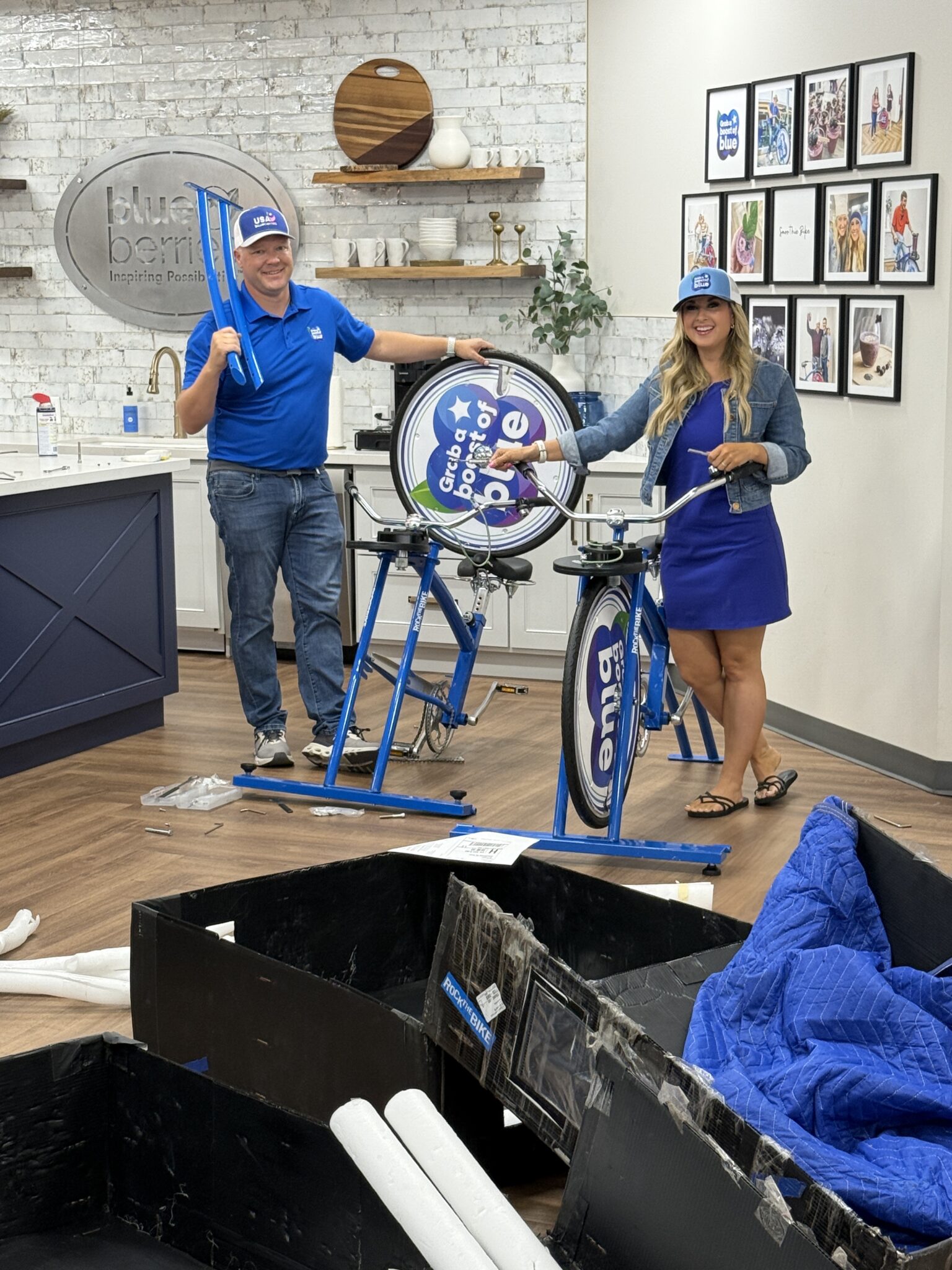
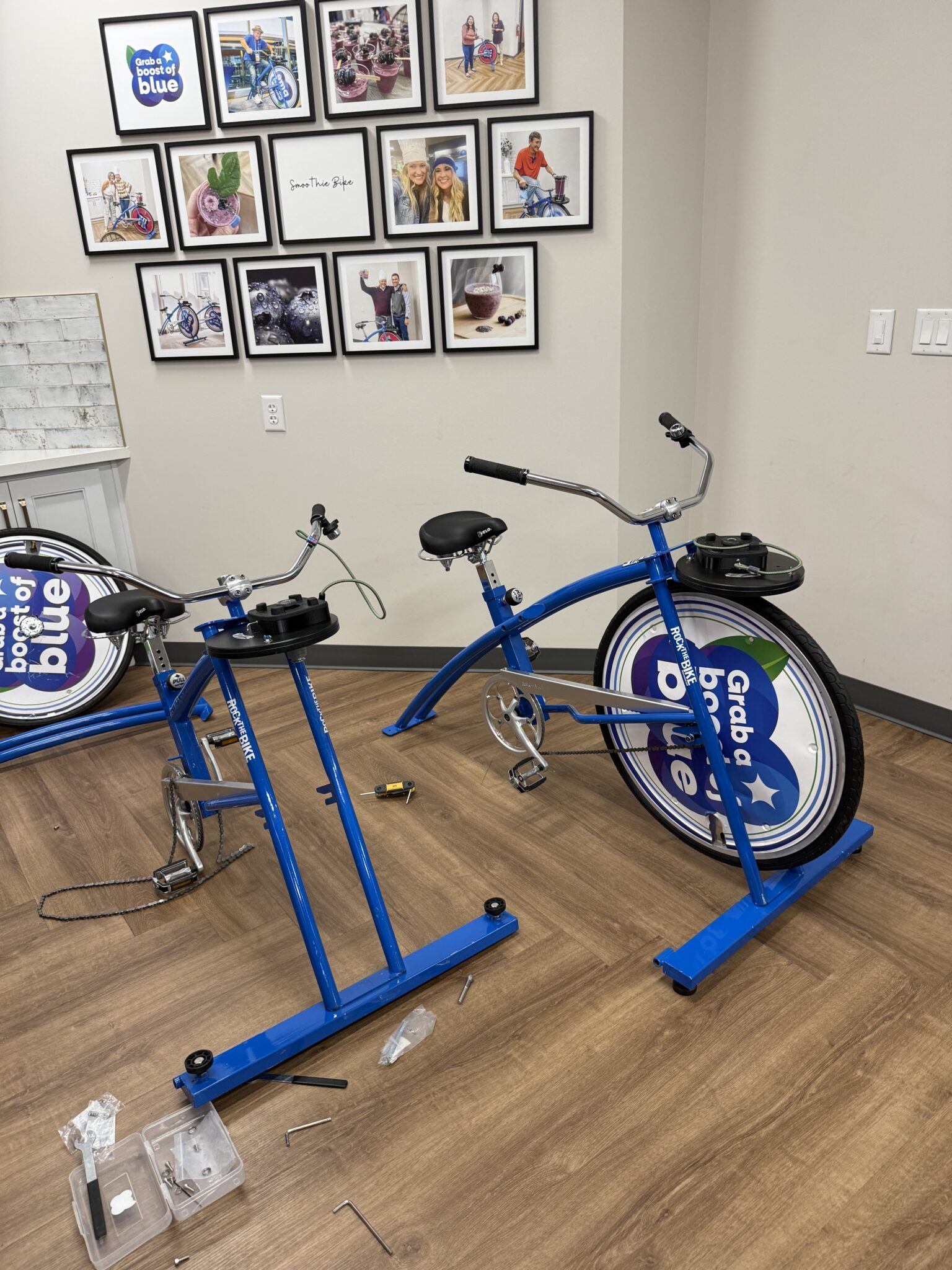
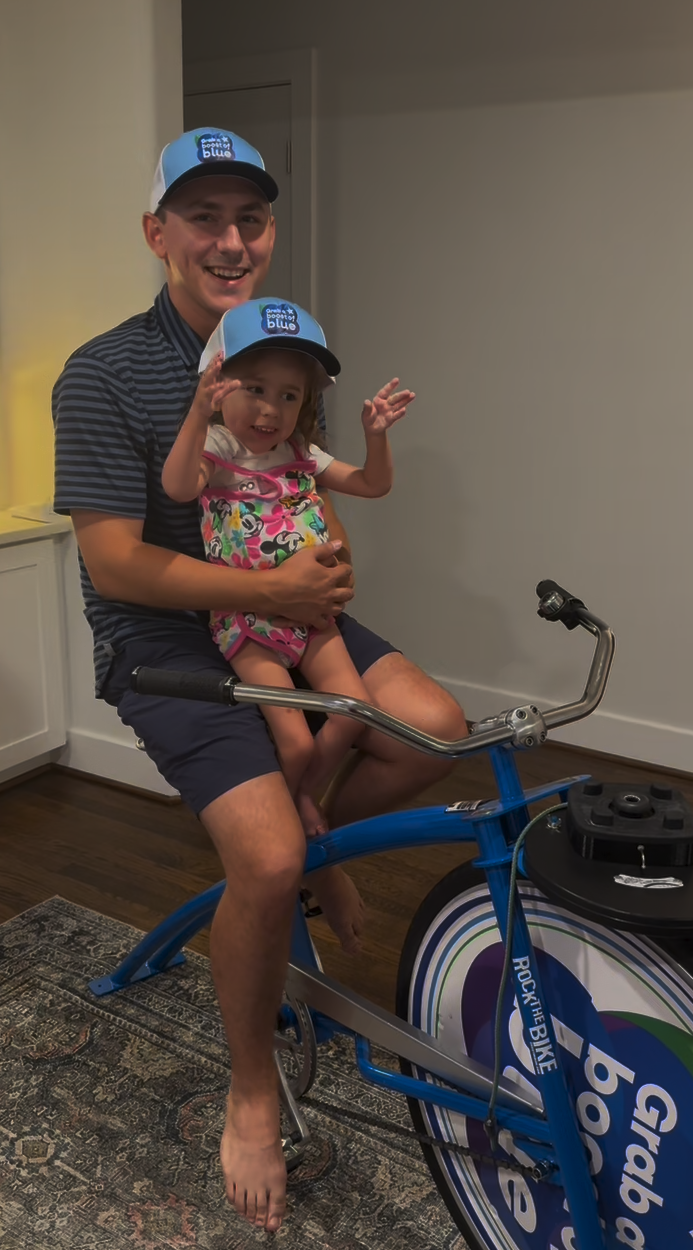
By now, many of you have seen the coverage of our blueberry smoothie bike on stage at the Great American Farmers Market earlier this month (more on that below), but the story behind getting the bike to Washington, D.C., is a tale in itself.
A few months ago, NABC Government Affairs Director Alyssa Houtby mentioned the blueberry smoothie bike to our contacts at USDA – and it must have stuck with them, because just a few days before the farmers market, we were notified that they’d like to have the bike at the event.
The NABC team sprung into action, putting the bike together at Blueberry HQ in Folsom, California, testing it and making needed adjustments, and express shipping it to D.C.
Once there, Monument Advocacy’s John Webber rebuilt the bike, tested it again and got it to its final destination – center stage at the Great American Farmers Market.
Then the real magic happened.
USDA Secretary Brooke Rollins and Health and Human Services Secretary Robert Kennedy Jr. took to the stage – with the bike in view – to discuss healthy eating. And Kennedy hopped on the bike and made a blueberry smoothie, then toasted his creation with Rollins.
And just like that, the blueberry smoothie bike was seen around the world, and word about the health halo of blueberries and the hard work of America’s blueberry growers spread far and wide.
Wow! What a moment for blueberries, growers and the NABC.
Blueberries Take Center Stage at the Great American Farmers Market
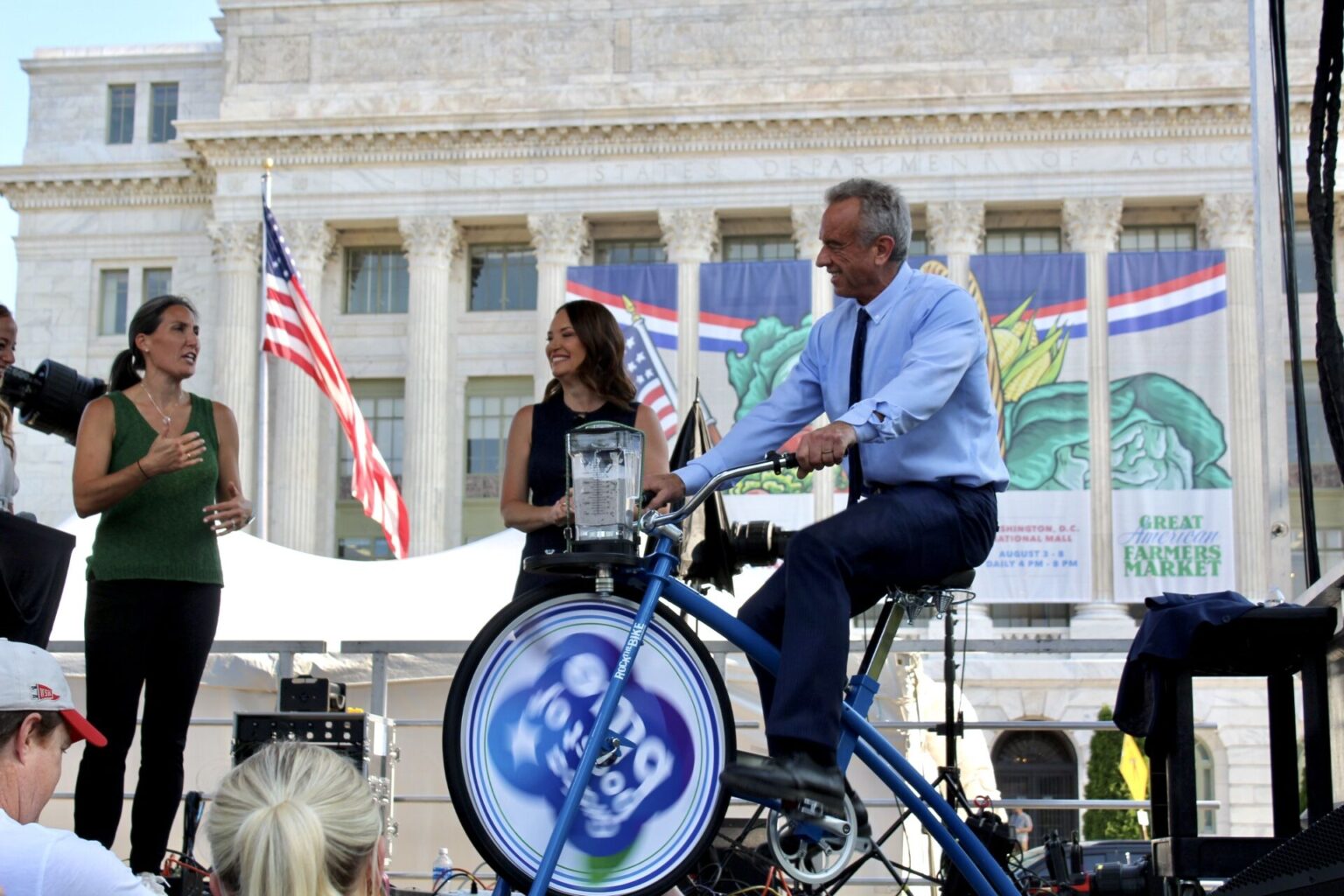
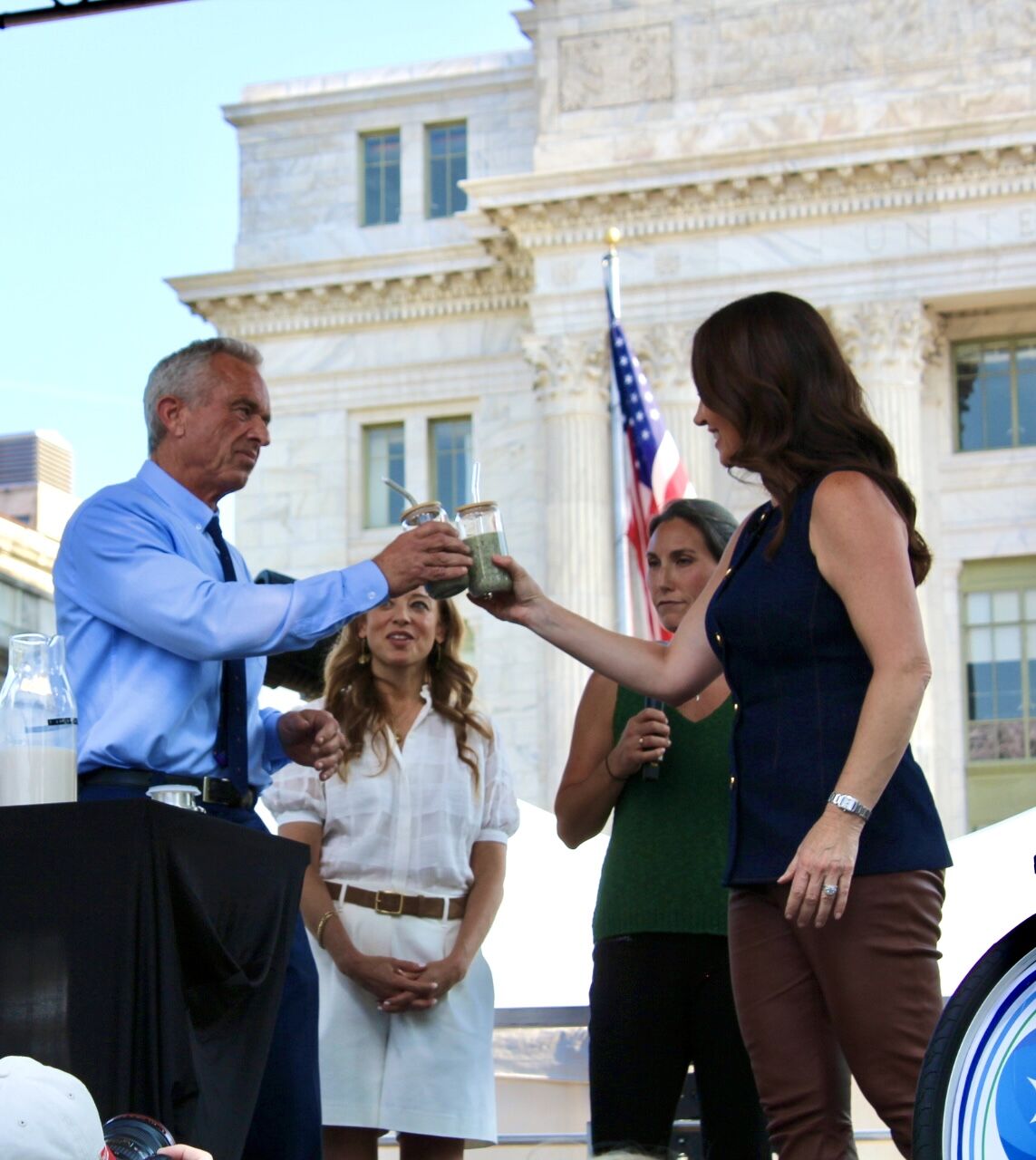
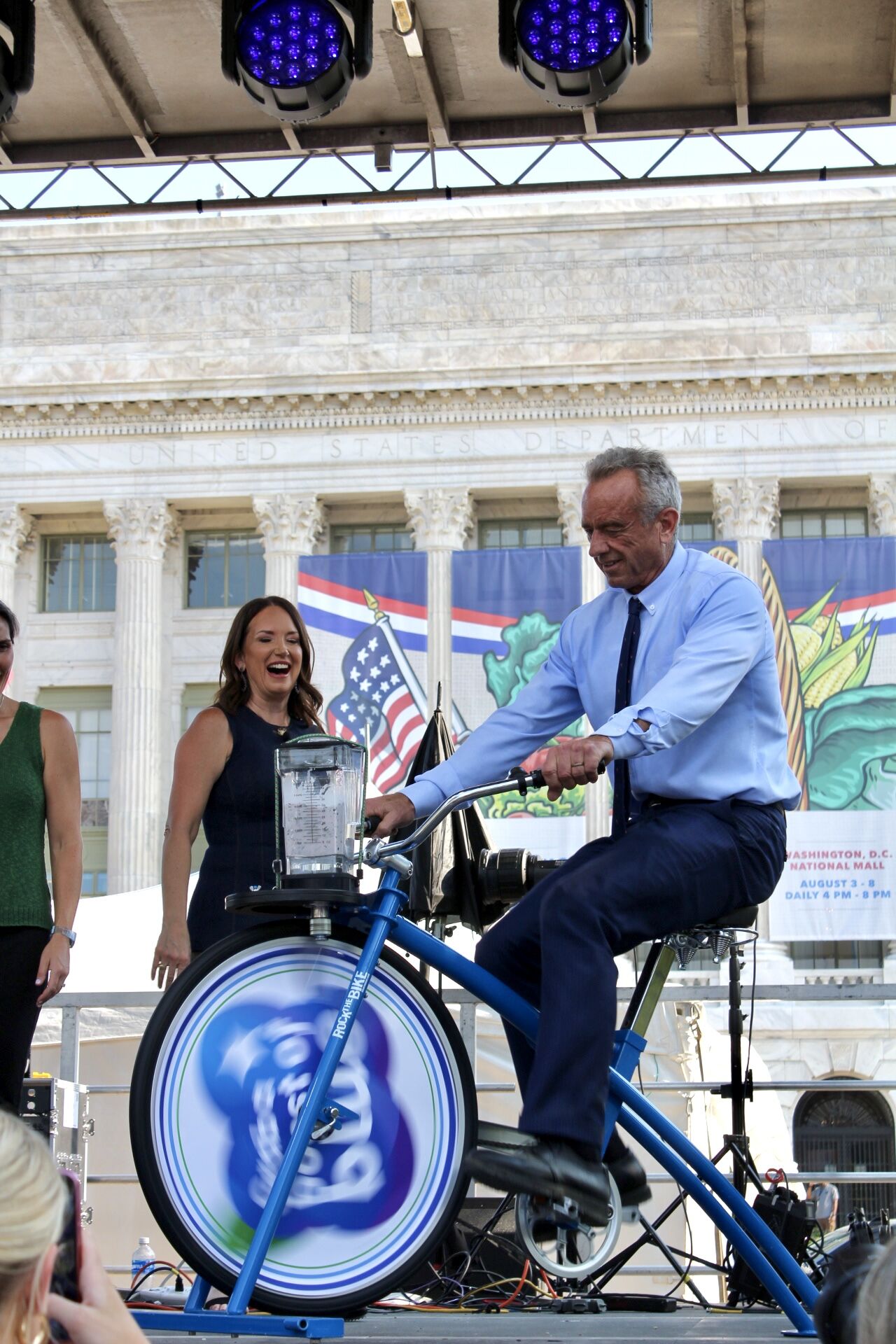
To help kick off The Great American Farmers Market earlier this month in Washington, D.C., blueberries were positioned center stage with USDA Secretary Brooke Rollins and Health and Human Services Secretary Robert Kennedy Jr. to talk about health.
The appearance was a priceless (and well-earned) opportunity to showcase blueberries’ health halo – and drive home the beloved nature of our superfruit.
Secretary Kennedy showcased his passion for the Make America Healthy Again movement by jumping on the USHBC’s blueberry smoothie bike to blend a carefully crafted blueberry smoothie that he and Secretary Rollins toasted to on stage.
Sending the blueberry bike to Washington, D.C., helped us double-down on the message that blueberries (and the hardworking farmers who grow them) have earned a spot on the stage when it comes to the conversation about health.
The smoothie bike helped us communicate not only our beloved blues health halo, but why blueberries really are becoming the world’s favorite fruit – a vision we laid out and are delivering on with efforts like this.
Because when anyone is talking about healthy foods, they know they can count on blueberries to deliver – and we have the research and data to prove it.
Just as our growers are doing the work of growing this superfruit, NABC continues to fight for growers to get the attention they deserve.
Do We Still Need a Farm Bill in 2025?
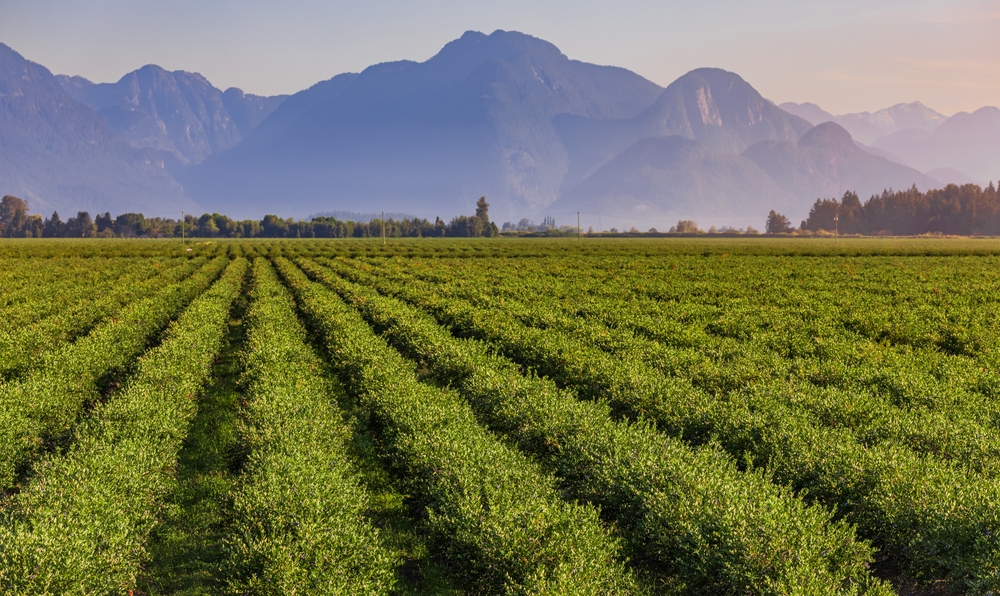
Although the One Big Beautiful Bill Act (OBBA) made significant investments in programs that support specialty crops, the Senate’s rules restricted the OBBBA from specifying how those investments should be allocated. Additionally, if a policy didn’t have a fiscal impact, it could not be included. As a result, several policy priorities for specialty crop growers were left out.
Key areas where a new farm bill is still needed include:
- Directing funds to their intended purpose from the OBBBA. The OBBBA set aside substantial new funding for research, trade promotion and state block grants over the next five years. However, Congress still needs to direct that funding to specific programs and purposes, such as Technical Assistance for Speciality Crops (TASC), the Market Access Program (MAP), and research into mechanization and automation.
- Expanding eligibility requirements for TAP. Currently, the Tree Assistance Program (TAP) only covers fields where bushes are completely dead. Yet, following a natural disaster, a field may no longer be commercially viable even though the bushes are alive. Expanding TAP eligibility would provide much-needed relief in these situations.
- Improving crop insurance for specialty crops. Specialty crop policies must be both effective and affordable. NABC supports additional policy options for blueberry growers, including optional units that reflect the diversity of varieties and farming practices, and developing a new revenue-inclusive policy to strengthen the safety net for growers.
- Funding critical research in crop protection tools. The Interregional Research Project Number 4 (IR-4 Project) plays a vital role in helping specialty crops gain access to crop protection products by generating the data required for registration. However, stagnant federal funding forced IR-4 to reduce new research by more than 20% in the past five years and close two analytical labs. Mandatory funding is urgently needed to restore IR-4’s capacity and deliver more tools to specialty crop farmers.
These priorities – and many others – are reflected in the Specialty Crop Farm Bill Alliance’s (SCFBA) updated proposals for the next phase of the farm bill.
As an active member of the SCFBA, NABC will continue advocating for Congress to pass a new farm bill – Farm Bill 2.0 – that advances these critical policy priorities for specialty crop growers.
NABC Joins DHS Roundtable Discussion on H-2A Program
Last month, NABC joined agricultural organizations for a roundtable discussion with the Department of Homeland Security’s (DHS) Office of Partnership and Engagement to address challenges and needed improvements to the H-2A program.
During the discussion, we highlighted several priority issues and urged DHS to take the following actions to serve and protect the agricultural sector:
- Eliminate the asylum program fee and ensure any future fee increases are directly tied to enhanced services.
- Remove the cap on the number of workers allowed per U.S. Citizenship and Immigration Services (USCIS) petition.
- Allow for electronic petition filing.
- Improve interagency coordination by creating a single filing portal.
- Prioritize timely petition processing to ensure workers arrive by the date of need.
- Rescind the DHS rule “Modernizing H-2 Program Requirements, Oversight and Worker Protections.”
DHS expressed a strong interest in improving the H-2A program, and acknowledged agriculture as a national security priority. The department noted that agriculture has been the most engaged industry in seeking collaboration, and committed to a follow-up meeting as they develop an action plan based on the information shared.
DOL Suspends H-2A Certification Fee
The Department of Labor’s (DOL) Employment and Training Administration (ETA) will temporarily suspend H-2A certification fees beginning Sept. 2, while the agency moves toward a new electronic payment system.
During the temporary suspension period, ETA’s Office of Foreign Labor Certification (OFLC) will not issue invoices for certification fees for H-2A Applications for Temporary Certifications that are certified, and will not seek retroactive payment of fees for those certifications. Any employer that is issued an H-2A certification fee invoice prior to the effective date of the temporary suspension of collections must pay the invoice by the due date.
OFLC will announce the end of the temporary suspension of H-2A certification fees via a Federal Register notice.
NABC Responds to USDA Reorganization Plan
Late last month, USDA Secretary Brooke Rollins released a memorandum outlining the department’s proposed reorganization plan.
The plan includes consolidating operations, closing the South Building, and relocating approximately 2,600 Washington, D.C.-based positions to five regional hubs: Raleigh, North Carolina; Kansas City, Missouri, Indianapolis, Indiana; Fort Collins, Colorado; and Salt Lake City, Utah. Stakeholders are invited to submit feedback to [email protected] through August 26.
During a Senate Agriculture Committee hearing, Deputy Secretary of Agriculture Stephen Vaden defended the plan, saying it “ rightsizes the USDA footprint, eliminates unnecessary management layers, consolidates redundant or duplicative functions, and most importantly, allows USDA to deliver on its mission to the American people within the bounds of its available financial resources.”
Vaden emphasized USDA’s telework policies in the National Capital Region (NCR), noting that 90% of USDA employees already work outside the NCR. He argued that the plan complies with congressional direction, citing the Use It Act, which requires all government buildings to maintain 60%. None of USDA’s facilities currently meet this standard. He noted that four of USDA’s 4,754 facilities nationwide would be closed under the plan.
Vaden stressed that the plan does not reduce field staff across the country, and that the Trade and Foreign Agriculture Affairs mission area will continue to be based in Washington, D.C.
“The reorganization plan will allow us to build the next generation of leadership,” Vaden said, highlighting employee retention challenges and the high cost of living in the NCR as reasons for moving to a regional hub model. “The hardest problem that any federal agency faces is talent retention … the cost of living in Washington, D.C., is cost-prohibitive.”
USDA has opened a 30-day consultation period (through August 26), after which the Secretary and Deputy Secretary will visit proposed hub locations, finalize the distribution of mission areas and office space with GSA, and release a phased timeline for implementation, including vacating NCR offices.
NABC’s Director of Government Affairs Alyssa Houtby participated in a roundtable discussion hosted by Farm Foundations, a nonpartisan agriculture policy think tank, on the reorganization plan. She raised the following priorities:
- Employee retention and recruitment: While some attrition is expected, USDA should offer retention packages for relocating staff, proactively recruit new employees in the regional hubs and streamline hiring to ensure a smooth and effective transition.
- Regional hub locations: The absence of a West Coast hub is concerning given the scale and diversity of specialty crop production in California, Oregon and Washington. Additionally, USDA should consider establishing a regional hub dedicated to the specialty crop sector.
- Field Services: USDA should not consolidate National Resources Conservation Service (NRCS) and Farm Service Agency (FSA) service centers, and cost savings from the plan should be reinvested in hiring additional research and field personnel.
- RMA Area Offices: The Risk Management Agency’s (RMA) 10 area offices must remain in place as crop insurance programs require hyper-regional expertise to service crop insurance policies, which are highly commodity specific.
- Trade and Foreign Agriculture Affairs (TFAA) and U.S. Codex Office: Trade policy, market access and enforcement functions must remain centralized in Washington, D.C. Proximity to partners at the Office of the U.S. Trade Representative and U.S. the Environmental Protection Agency and foreign governments ensure timely collaboration, policy coordination and alignment with U.S. agriculture trade priorities.
- Washington, D.C. Presence: USDA should maintain a strong presence of staff in Washington, D.C. Like many commodity organizations, NABC hosts an annual fly-in for our members to engage directly with Congress and administrative agencies, the most important of which is USDA. This proximity enables productive alignment across federal and private stakeholders, maximizing the value of every trip.
NABC will continue to monitor the reorganization process and provide input to ensure the needs of the blueberry industry are considered.
NABC Applauds Nomination of Julie Callahan as Chief Ag Negotiator at USTR
NABC congratulates Julie Callahan, Ph.D., on her nomination by President Trump to serve as Chief Agriculture Negotiator in the Office of the U.S. Trade Representative (USTR). NABC President Kasey Cronquist and Director of Government Affairs Alyssa Houtby issued the following statements in support of her nomination:
“The North American Blueberry Council fully supports Dr. Julie Callahan’s nomination as Chief Agriculture Negotiator. Dr. Callahan is a trusted and accomplished advocate for U.S. farmers. During her time as Assistant USTR for Agricultural Affairs, she played a key role in securing meaningful trade wins for the blueberry industry, including expanded market access and tariff reductions in several priority markets. We look forward to continuing our work with Dr. Callahan to reduce barriers to trade and grow global demand for U.S. blueberries.” – Kasey Cronquist, NABC President
“Dr. Callahan brings exceptional expertise and a clear understanding of agricultural trade policy, including the blueberry industry’s priorities around market access, tariff reduction and the removal of nontariff barriers. The U.S.-Mexico-Canada Agreement (USMCA) is vital to our industry, and we look forward to working with her as the agreement undergoes reevaluation. Her leadership and insight will be key to ensuring USMCA continues to support fair and open trade for the blueberry industry. We appreciate Dr. Callahan’s commitment to knocking down barriers and creating new opportunities for our growers, and we urge the Senate to confirm her nomination without delay.” – Alyssa Houtby, NABC Director of Government Affairs and appointee to the USTR-USDA Agricultural Technical Advisory Committee for Trade in Fruits and Vegetables
Register for The Blueberry Convention Before Early-Bird Pricing Ends
Time’s running out to take advantage of early-bird registration pricing and hotel discounts for The Blueberry Convention, October 8-10 in Seattle! Sign up by Sept. 8 to save!
Wondering what it’s all about? We’re glad you asked!
Check out the still-developing schedule of events, then get signed up to participate in:
- Top-notch education sessions from industry thought leaders.
- The Blueberry Boost Accelerator Live Pitch Competition.
- Blueberry Lane and Blueberry Row expo areas.
- The NABC & USHBC Anniversary and Awards Dinner.
- BerryFit Club yoga and 5k (where you’ll see the sites of Seattle).
- The Blueberry Farm Tour: A Taste of Washington’s Finest.
Sign up by Sept. 8 for best pricing. And be sure to add all the special events you want to be a part of as you register. Plus, be sure to reserve your room in our discounted housing block, also by Sept. 8.
Membership Campaign Welcomes New Faces, Keeps Growing
As part of National Blueberry Month, NABC launched a special July membership campaign with the theme “Join NABC and Watch Your Business Bloom.”
The campaign invited prospective members to celebrate blueberries by joining our forward-thinking community of affiliates, industry trade organizations, distributors, suppliers and retailers. Throughout the month, we shared the many ways NABC membership delivers value – from advocacy and market insights to networking and visibility in the blueberry industry.
And the momentum doesn’t stop here! While July marked a concentrated push for new members, we’re continuing our outreach to welcome more voices, ideas and perspectives into the NABC family all year long.
Membership Growth Over the Years
NABC’s membership strength has been building steadily — and this year marks an exciting leap forward. In 2014, NABC counted 141 active members. A decade later, that number has nearly doubled, reaching 275 members in 2025. This growth reflects not only the strength of our advocacy and industry programs, but the commitment of blueberry professionals across the supply chain who see the value of coming together as one unified voice.
We’re proud of this momentum and look forward to continuing to grow, ensuring that NABC represents the full breadth and diversity of the blueberry industry.

Please join us in welcoming our newest members:
- Alegria Insurance Services
- Gator Blueberries
- Krewer Consulting, LLC
- University of Minnesota
- WiseConn
- Zilfina Rubio Ames