
Topics in this issue of Blues Update:
- Uniting to Win in Washington, D.C.
- Federal Spending Deal Sets Stage for Ag Labor Action
- Add Your Voice to the Blueberry Hill Climb
- At the Top of the Pyramid: 2025 Dietary Guidelines Present Opportunities for Blueberries
- Assistance for Specialty Crops Punted
- Save the Date! USDA-NRCS Regenerative Agriculture Pilot Program Overview
- NABC Represented at 2 Industry Events
- Meet Our New Member!
Uniting to Win in Washington, D.C.
By Teddy Koukoulis
NABC Chair
Following one of NABC’s best years of membership and organizational growth, 2026 is shaping up to be a monumental year for our organization’s efforts on behalf of our members. As a blueberry grower in Florida, I can assure you that we don’t operate from an ivory tower. We’re volunteer-led, and our progress is fueled entirely by the input of our members and the dedication of our committee members who donate their time to ensure our representative voice is heard.
That’s why it’s critical that the blueberry industry continues to thrive – and shows up in force at this year’s Blueberry Hill Climb, March 2-6, in Washington, D.C.
When we walk the halls of Congress, we need to show them that we are a unified voice on behalf of blueberries. Our goal is to:
- Advocate for policies that we all agree support our industry and move the needle on the specific policy issues we can actually influence.
- Showcase the economic impact of our growers to key decision-makers.
- Demonstrate the power of a volunteer-driven industry taking its seat at the table.
Our committee members have already been doing the heavy lifting to prep our strategy, but nothing replaces a face-to-face conversation between a grower and their representative in Congress. The success of our industry in 2026 depends on our presence in D.C.
Therefore, I’m asking you to join us. Let’s take our messages to the Hill and make it clear that the blueberry industry is organized, united and ready to work together for the long-term success of this industry we all love.
Federal Spending Deal Sets Stage for Ag Labor Action
Earlier this month, lawmakers announced a $1.2 trillion federal spending deal that includes four appropriations bills covering agencies such as the Department of Labor (DOL) and the Departments of Homeland Security (DHS) and Education. The agreement puts Congress on track to fund the federal government ahead of the January 30 deadline, helping avoid another government shutdown.
As part of the appropriations process, NABC joined with a broad coalition of agricultural organizations to advocate for favorable appropriations riders related to the H-2A program. These efforts focused on blocking enforcement of burdensome regulations, capping the Adverse Effect Wage Rate (AEWR), and expanding the defined period of admission for workers.
Ultimately, the final Joint Explanatory Statement accompanying the spending package includes only limited H-2A-related language within the DHS and Labor-HHS provisions related to program oversight and the prevention of abuses. Our priority riders were not included, largely because they are policy-oriented in nature, and appropriators generally steer away from policy riders – even when there is support from the committees of jurisdiction. While frustrating, this outcome is not unexpected.
Importantly, however, during the later stages of negotiations, NABC and its partners became aware that the White House weighed in and expressed some level of support for the H-2A riders, marking a notable and positive shift in tone. As a result, the outlook for a legislative solution to agricultural labor challenges has become more optimistic.
That optimism is reinforced by recent statements from House Agriculture Committee Chair G.T. Thompson, who has publicly indicated his intent to introduce farm labor legislation in the coming weeks. The anticipated bill would implement many of the policy recommendations developed by the 2023 Ag Labor Policy Working Group, while also codifying elements of the Department of Labor’s interim final rule. Chairman Thompson has expressed hope that the legislation will be introduced as early as February.
Agricultural labor reform will be a priority topic during NABC’s Blueberry Hill Climb in March, where our members will have the opportunity to engage directly with policymakers and experts on what comes next.
As part of the hill climb, attendees will hear from a panel of leading voices during a session titled Agricultural Labor Reform: What’s Next. The panel will examine recent regulatory changes in agricultural labor and the legislative efforts underway to make those changes permanent. Policy experts will share expectations for future labor reform, highlight opportunities and challenges for growers, and offer guidance on how to effectively leverage personal stories to influence decision-makers.
Speakers include:
- John Hollay, President and CEO, National Association of Agricultural Employers
- Lynn Jacquez, Principal, CJ Lake; Counsel, Agriculture Labor Policy Group & The Agriculture Workforce Coalition
- Kristi Boswell, Counsel, Alston & Bird; Counsel, Grow It Here Coalition
NABC will continue working alongside our partners on Capitol Hill to advance practical, workable labor solutions that support blueberry growers and the broader agricultural community.
Add Your Voice to the Blueberry Hill Climb

By Ellie Norris
Government Affairs Committee Chair
As the chair of the North American Blueberry Council’s Government Affairs Committee, I’m proud of the work that this council is doing on behalf of our farms. In my opinion, the Government Affairs Committee is the heartbeat of our association and we’ve come a long way in the last five years in the work we are doing and more importantly, the work we are accomplishing.
As we begin the new year, it’s important to recognize that our diversity of perspectives is a real strength. When we come together as a committee, we represent an industry that is broader than any single farm, region or production model. We’re focused on consensus, looking for how we can win and, most importantly, unifying the majority of the industry who seek out that common ground, because that is where the strength lies.
One of those common ground opportunities is our annual Hill Climb and we need your voice, your experience, your thought leadership – and you can share all of those things by joining us for The 2026 Blueberry Hill Climb and Industry Meetings, March 2-6 at the Watergate Hotel in Washington, D.C.
With a host of critical policy decisions on the horizon, I’m hoping we can count on you to ensure growers’ voices are heard in our nation’s capital.
There are a number of important topics we’ll be tackling this year, including:
- Ag workforce and H-2A reform.
- Farm Bill programs, including improvements to disaster assistance programs and risk management tools.
- Federal nutrition programs to drive increased consumption.
- Additional policies to help growers remain successful and competitive.
I hope you’ll join us in Washington, D.C., in March to drive home these critical policy priorities. NABC and Monument Advocacy will provide the training and messaging you need to make a real difference.
The event is also your chance to participate in USHBC and NABC committee meetings, network with peers, learn from engaging speakers and experience our nation’s capital.
Sign up and reserve your hotel room today!
To register, sign in with your Glue Up credentials or create an account by following the prompts. Email Stacy Plarr at [email protected] if you need assistance.
At the Top of the Pyramid: 2025 Dietary Guidelines Present Opportunities for Blueberries
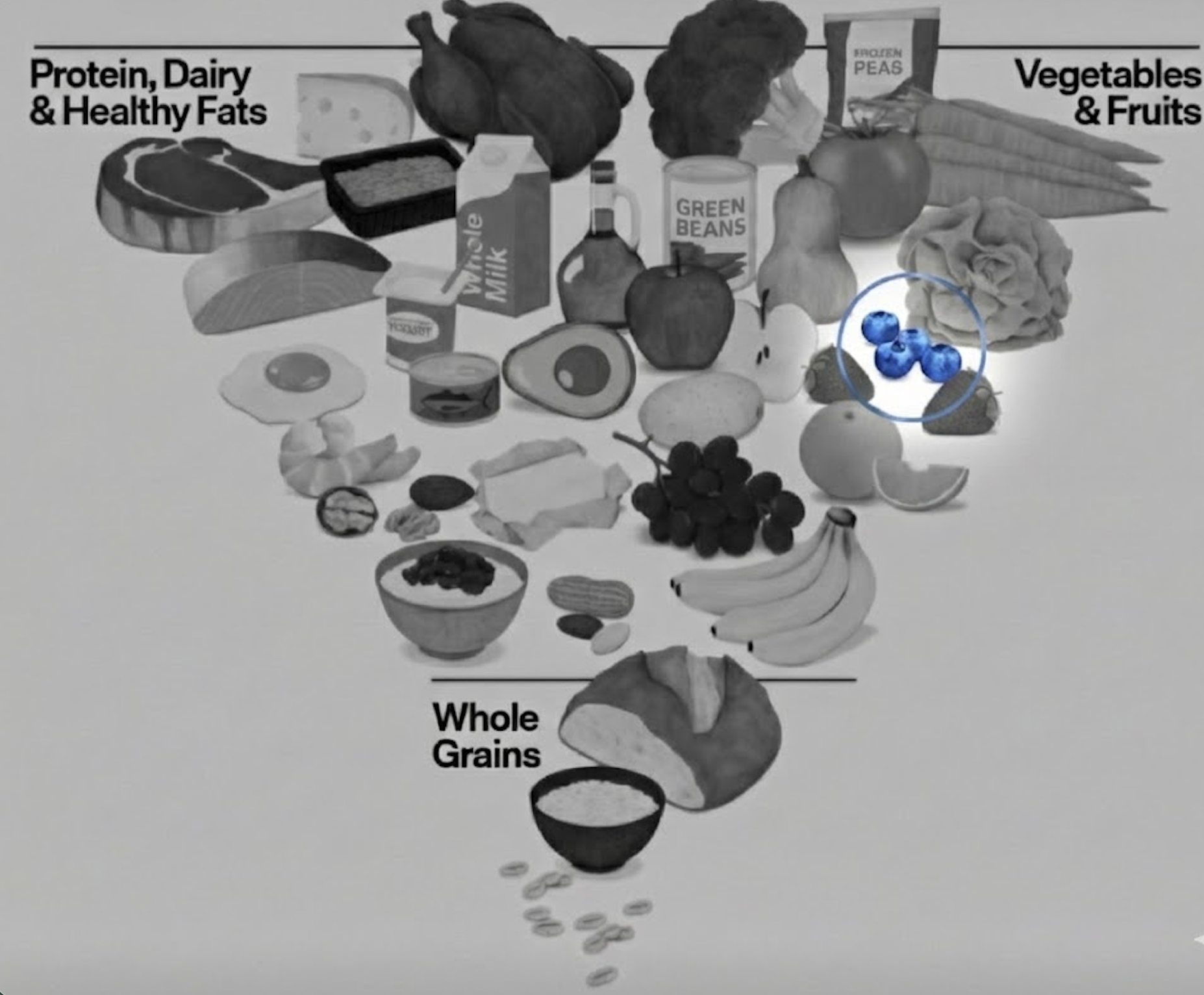
The U.S. Department of Health and Human Services (HHS) and the U.S. Department of Agriculture (USDA) released the 2025-2030 Dietary Guidelines for Americans (DGAs), reaffirming the essential role fruits and vegetables play in overall health. The new DGAs encourage Americans to consume fruits and vegetables “throughout the day” and emphasize whole foods as a cornerstone of healthy dietary patterns.
The updated guidelines feature the now widely discussed “inverted pyramid,” which places blueberries prominently at the top – an encouraging signal for the blueberry industry and a recognition of blueberries’ nutritional value. Importantly, HHS and USDA also reinforced that fresh, frozen and dried forms are all essential options for achieving the nutritional goals set out in the guidelines.
In response to the release of the 2025 Dietary Guidelines for Americans, NABC President Kasey Cronquist issued the following statement:
“The North American Blueberry Council welcomes the newly released 2025 Dietary Guidelines for Americans, which emphasize eating whole foods, such as blueberries – fresh, frozen and dried. The Dietary Guidelines play a critical role in shaping dietary choices and supporting the shared goal of making America healthy again by helping ensure that all Americans, including those participating in federal nutrition programs, are eating high-quality, nutrient-dense foods like blueberries.
“The blueberry industry has invested millions of dollars over many years in robust health and nutrition research that demonstrates the unique and well-documented benefits of blueberry consumption. We have long advocated for the Dietary Guidelines to provide more specific and meaningful guidance that reflects differences among fruit types. Fruits such as blueberries, which are low glycemic and rich in health-promoting anthocyanins, offer distinct nutritional benefits and should be recognized accordingly within federal nutrition policy. Looking ahead to the 2030 Dietary Guidelines for Americans, we remain committed to working with USDA and HHS to drive increased consumption of uniquely healthy fruits like blueberries.”
While the 2025 DGAs maintain the long-standing recommendation that Americans consume two servings of fruit per day, they stop short of making specific recommendations for types of fruits or vegetables. Previous versions of the guidelines included vegetable categories with corresponding intake targets, but those distinctions were removed in the current update. Although the continued emphasis on fruits and vegetables is overwhelmingly positive, there remains important work ahead to ensure the 2030 DGAs provide more meaningful, specific guidance that reflects differences among fruit types.
It is also important to recognize that while the DGAs inform federal nutrition policy – including school meal programs – they are not self-implementing. Instead, the USDA’s implementing regulations determine how and when the DGA recommendations are applied. For example, while the 2020-2025 DGAs recommended limiting added sugars, those recommendations were not incorporated into binding school nutrition program regulations until USDA finalized updated standards in 2024, with implementation beginning in the 2025-26 school year. This distinction underscores the opportunity for continued engagement with USDA to ensure that blueberries are included and promoted within federal nutrition programs.
Such engagement is closely aligned with USHBC’s work to increase blueberry demand in K-12 schools. Both initiatives are built on decades of health and nutrition research funded by blueberry growers and directed by USHBC, demonstrating the well-documented health benefits of blueberry consumption.
As implementation of the 2025 DGAs moves forward, NABC will continue advocating for science-based policies that reflect the nutritional value of blueberries and drive increased consumption.
Assistance for Specialty Crops Punted
Congress Eyes the Next Funding Package
The House has released its remaining fiscal year 2026 spending bills, and it now appears that additional funding for agriculture will not be included in this package, which already has bipartisan, bicameral support in its current form. While this is a disappointing development, our efforts are not wasted and they must continue. Growers need assistance and Congress and USDA must still find a way to deliver it.
Although specialty crops are not included in this legislative vehicle, our message is breaking through the noise. NABC is working closely with allied agriculture associations and the Specialty Crop Farm Bill Alliance, and will continue engaging on Capitol Hill, including with House and Senate Agriculture Committee and Appropriations Committee staff, to chart a path forward.
Importantly, securing economic assistance for specialty crops will be a priority topic during the upcoming Blueberry Hill Climb, including in our Hill meetings and discussions with USDA.
Earlier this month, NABC joined dozens of agricultural organizations in a bipartisan letter urging Congress to address the ongoing farm economic crisis. While recent investments by Congress and USDA are appreciated, the coalition emphasized that losses, particularly for specialty crop producers, remain unresolved and require further action.
Senate leaders continue to signal openness to future relief. Sen. John Hoeven (R-ND) noted that while the current appropriations bills are likely to pass without a continuing resolution, Congress will continue looking for opportunities to advance additional agricultural assistance, including through a potential supplemental appropriations bill. Similarly, a spokesperson for Senate Agriculture Committee Chairman John Boozman (R-AR) affirmed that he will keep working with colleagues to deliver the resources producers need to keep farming, with a supplemental package identified as a viable option.
Take Action!
Even though this funding package is moving forward without agriculture assistance, your advocacy is making a difference and it must continue. Send a letter to your members of Congress, urging them to support a supplemental appropriations package that delivers meaningful economic assistance for specialty crops. Sustained outreach now will help ensure this issue remains front and center as Congress considers next steps.
Save the Date! USDA-NRCS Regenerative Agriculture Pilot Program Overview
Join the USDA’s Natural Resources Conservation Service (NRCS) alongside the North American Blueberry Council and the International Fresh Produce Association on Feb. 12 at 2 p.m. ET. for a discussion on the newly announced Regenerative Agriculture Pilot Program.
Registration will open soon!
NABC Represented at 2 Industry Events
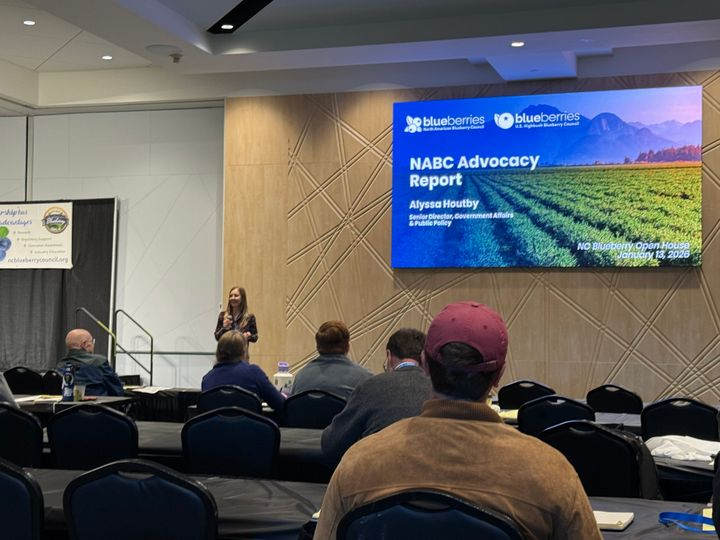
Earlier this month, the NABC team hit the road to engage with growers and partners at two premier industry events: the Southeast Regional Fruit & Vegetable Conference and the North Carolina Blueberry Open House.
At the Southeast Regional Fruit & Vegetable Conference, our team hosted industry meetings and welcomed visitors to the NABC table display. NABC Chair Teddy Koukoulis and President Kasey Cronquist met with industry leadership from Florida, Georgia and North Carolina to discuss the challenges and opportunities regionally, nationally and internationally, highlighting how NABC and USHBC are the only two organizations that can do what they do for the blueberry industry, and that the work they are doing has never been more important than it is today.
Outreach and industry engagement efforts continued in North Carolina at the North Carolina Blueberry Open House, with Alyssa Houtby, senior director of government affairs and public policy, and Amanda Griffin, vice president of engagement and education. Houtby took to the stage to share NABC’s work, delivering a presentation highlighting our ongoing advocacy work and providing updates on the joint health policy initiatives led by the NABC and the U.S. Highbush Blueberry Council (USHBC).
Between sessions, the team connected with attendees at our trade show table to share resources and blueberry gear.
Meet Our New Member!
NABC membership keeps growing thanks to the many benefits of belonging. Please join us in welcoming our newest member!
- SQM Specialty Plant Nutrition N.A.
Have folks in your network who would benefit from NABC membership? Encourage them to join today!